Half Moon Caye Belize HAL private island
Port of Half Moon Caye, Belize | Cruise Port Guide

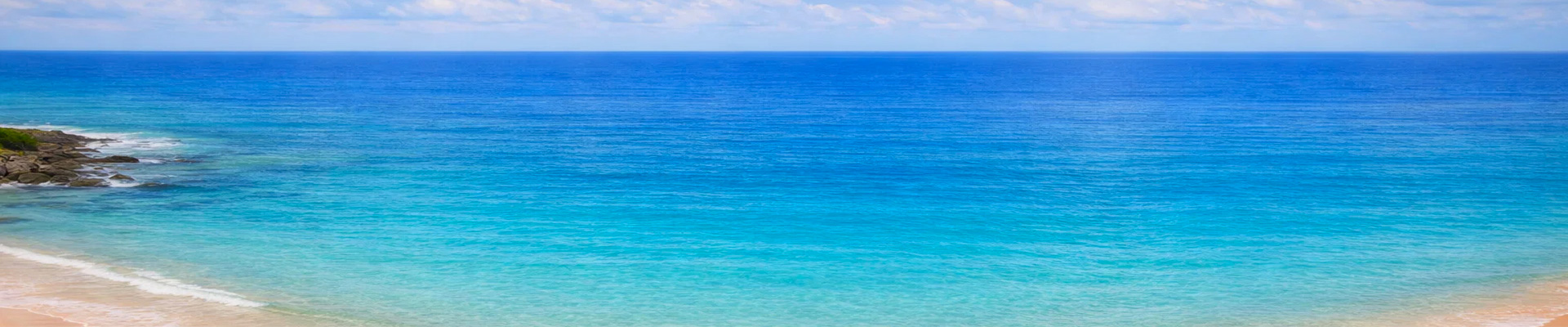
An arc of pale sand resting on the ocean, a cloud of wings above, and nothing else to the horizon. Half Moon Caye occupies the southeastern tip of Lighthouse Reef atoll, nearly 90 kilometres off the coast of Belize, and belongs to no one but the red-footed boobies that nest here by the thousands. The country's first protected area and one of the first marine reserves in Central America, the islet receives only small groups: smaller ships, cruising sailboats and day-trip catamarans, whose tenders weave between the coral heads to the beach.

An eighteen-hectare natural monument

The whole island can be explored in less than an hour, and yet it brings together two worlds. On the east side, a coconut grove opening onto beaches of coral sand; on the west side, a dense forest of orange-flowered ziricote trees, fertilized for centuries by the guano of the bird colonies. The Belize Audubon Society, guardian of the site since 1982, maintains a few trails, a visitor centre and simple rules: nothing is picked, nothing is left behind, everything is looked at. Near the landing stand the remains of the lighthouse that gave the atoll its name and long guided sailing ships toward the passes. Its natural monument status, part of the Belize Barrier Reef World Heritage Site, also protects the surrounding waters.

The platform of four thousand birds

At the end of a shady trail, an observation platform lifts visitors to canopy level, in the heart of the colony. The sight leaves you speechless: thousands of red-footed boobies, in a pale morph rare in the Caribbean, sit on their nests a few metres away, while frigatebirds puff out their scarlet pouches as they glide above the nests, watching for a chance to steal. The din, the smell, the comings and goings of wings make a scene you won't forget. Along the way, iguanas and large land crabs cross the trail without hurry: humans here are only passing guests.

The wall, an underwater cathedral

A short distance from the beach, the bottom suddenly drops away: the Half Moon Caye Wall plunges into the abyss, lined with barrel sponges and sea fans, patrolled by turtles, groupers and reef sharks. Scuba divers count it among the major sites of the Caribbean; snorkellers are happy on the reef flat, in two to five metres of unreally clear water. The famous Blue Hole, the circular sinkhole made world-famous by Cousteau, opens in the same atoll, a few nautical miles away.

A day without infrastructure, and all the better for it

No bar, no shop, no engine noise: visitors bring what they need, often in the form of a picnic served by the crew under the coconut palms. Hawksbill and loggerhead turtles come to nest on the beaches in season, so a few marked-off areas must be respected. You spend the day between swimming, napping and trips back and forth to the platform, in a simplicity that rests you from everything. Around a hundred bird species have been recorded here over the migrations, and binoculars pass from hand to hand under the coconut palms.

What to bring

  • Oxybenzone-free sunscreen, required in the protected reef waters.
  • Water shoes and a hat; shade is limited to the coconut groves.
  • Monument entrance fee generally included in the excursion; check with the ship.
  • Binoculars strongly recommended for the colony and the frigatebirds.

As the tender pulls away, the crescent of sand shrinks to a pale line beneath the cloud of wings that never quite settles. Few Caribbean ports of call offer so little to do and so much to contemplate; Half Moon Caye is a reminder, better than any speech, of what the sea gives when it is simply left in peace.

Frequently Asked Questions

At anchor offshore: the caye has no pier. Tenders thread between coral heads to the beach, on the southeast tip of Lighthouse Reef atoll, nearly 90 kilometres off the coast.
Small vessels only: compact ships, sailing cruisers and day catamarans. The caye is a protected reserve and does not take large cruise ships.
Little, and that is the point. The bird observation platform, snorkelling on the reef flat, swimming, and walking the island in under an hour. There is no bar, no shop, no engine noise.
Thousands of red-footed boobies, the pale form rare in the Caribbean, nesting a few metres away. Frigatebirds inflate their scarlet pouches as they glide over the nests. The platform lifts you to canopy height inside the colony.
Excellent. The reef flat gives two to five metres of unreally clear water. A short way off the beach, the Half Moon Caye Wall drops into the deep, carpeted with barrel sponges and patrolled by turtles and groupers.
Yes, the famous circular sinkhole made world-known by Cousteau opens in the same atoll, a few nautical miles away. It is a scuba site, not a snorkelling one.
None. No bar, no shop, no restaurant. Visitors bring what they need, often as a picnic set out by the crew under the coconut palms.
Oxybenzone-free sunscreen, required in the protected reef waters, water shoes and a hat, since shade is limited to the palm groves. Binoculars transform the bird colony.
Yes, and they are simple: take nothing, leave nothing, look at everything. The Belize Audubon Society has guarded the site since 1982. Turtles nest on the beaches in season, so some marked zones must be respected.
Yes for children who love nature and water. No for those wanting organized activities: there is nothing to do here but swim, walk and watch birds.