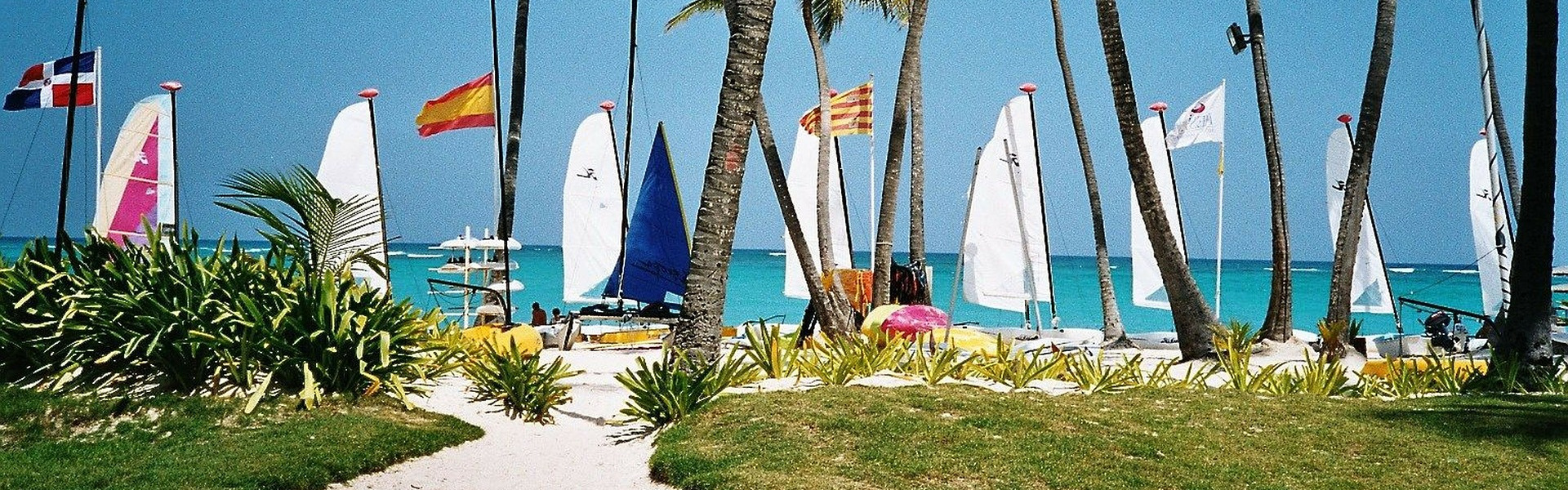
Cabarete is a two-kilometre village wedged between a beach and a lagoon on the Dominican north coast. It grew neither around the sand nor around the hotels, but around the wind: every afternoon a thermal rises with clockwork regularity and blows twenty to twenty-five knots across the bay. That phenomenon has made it, since the 1980s, one of the world capitals of windsurfing and kiteboarding.
The essentials in four lines
- About four and a quarter hours non-stop from Montreal to Puerto Plata (POP), twenty-five minutes away by road.
- The Dominican Republic is one hour ahead of Montreal in winter and on the same time in summer.
- The thermal wind rises around eleven and blows into the late afternoon, year-round, peaking from June to September.
- Surf swell arrives mostly from December to March.
Three beaches, three uses
Cabarete Bay
The village beach, a crescent sheltered by a reef a few hundred metres out. In the morning the water is flat and you swim; in the afternoon it belongs to the windsurfers. Restaurants set their tables directly in the sand at sunset.
Kite Beach
Two kilometres west, this is kiteboarding territory: a hundred canopies in the air on a good day, schools, and enough water to learn without getting in anyone’s way. A show even for non-participants.
Playa Encuentro
Five minutes west, a beach open to the Atlantic with five or six surf breaks at different levels. The swell is best in the morning before the wind rises, and the Dominican winter from December to March produces the most consistent waves. Schools rent boards and wetsuits by the hour.
Learning here
Cabarete is a rare place: the wind is reliable, the water warm year-round, the bay shallow and closed by a reef, and the supply of schools abundant and inexpensive compared with Europe or the United States.
For windsurfing and kiteboarding, count three to five days of lessons to sail on your own. For surfing, a morning is enough to stand up for the first time on a school wave at Encuentro. A multi-discipline competition brings surfing, windsurfing, kiteboarding and paddling together over one week each February.
If you do not do sports
El Choco national park, behind the village, protects limestone caves with underground lagoons and a network of dry-forest trails. The Cabarete lagoon is crossed by kayak at first light, with herons and kingfishers.
The 27 waterfalls of Damajagua are twenty-five minutes away, Sosúa and its snorkelling bay twenty, Puerto Plata and its cable car thirty. From mid-January to late March, whale excursions to Samaná leave from hotels in the region.
Accommodation
Cabarete does not work like an all-inclusive resort town. Most of the supply consists of small hotels, condos, apartments and surf camps sold without meals, often at very reasonable rates. One or two mid-size all-inclusive properties exist on the outskirts.
The village has some thirty restaurants over two kilometres, from street counter to beachfront table, which makes room-only entirely sensible here. If you still prefer an all-inclusive plan, our criteria for choosing an all-inclusive hotel help compare, and the large resorts of Puerto Plata are twenty-five minutes away.
When to go
For wind, June to September: the thermal is then strongest and most consistent. For surf, December to March, when North Atlantic lows send swell onto the coast. For beach and climate, December to April remains the best period, with air around 28 °C.
The north coast is largely spared by sargassum. Our guide on when to travel south from Montreal sets out the pricing calendar from Quebec.
To plan this trip, see also our Republique Dominicaine page, Sosua, La Romana and the sargassum picture.


