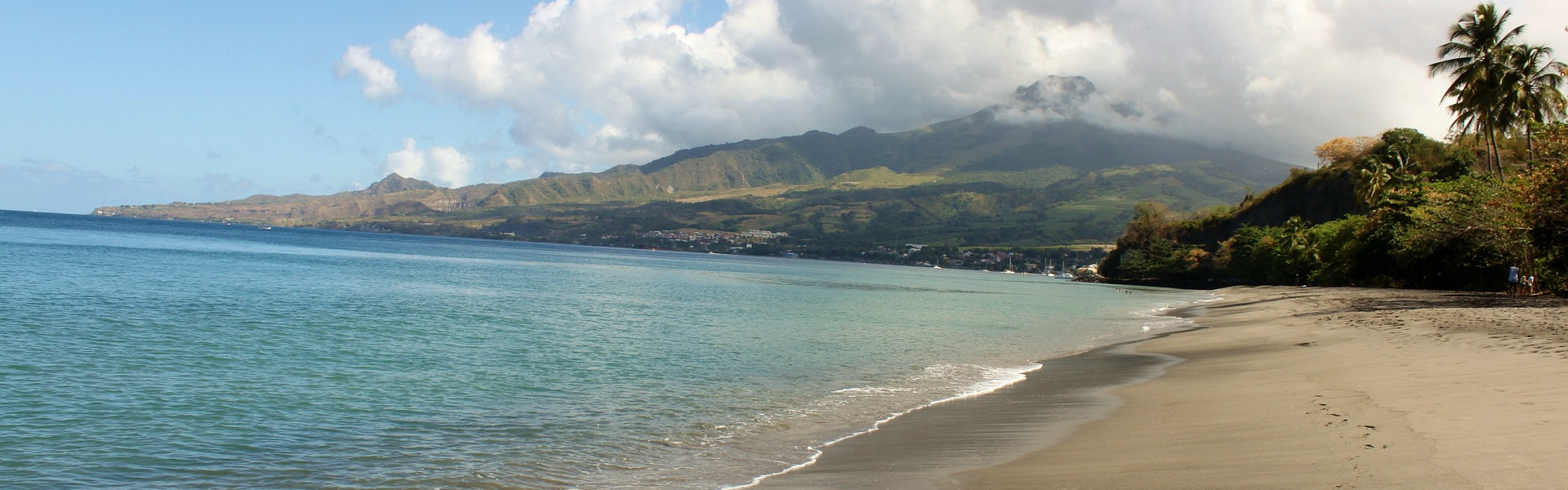
Martinique is a French overseas department: euros, French law, French hospitals, and driving on the right, which sets it apart from most of its Caribbean neighbours. What remains is a volcanic island of 1 128 square kilometres that shifts, in an hour’s drive, from northern rainforest to dry southern savanna.
The essentials in four lines
- Canadian passport valid at least three months beyond your planned departure date. No visa up to 90 days.
- About five hours from Montreal to Aimé Césaire (FDF), with non-stop service in winter.
- French department: euro currency, French language, right-hand driving, European-standard roads and hospitals.
- December to April is the dry season. Hurricane season runs from early June to late November.
Two islands in one
The north
Mount Pelée, rainforest, peaks covered in tree ferns, rivers and black-sand beaches. The area was inscribed on the UNESCO World Heritage list in 2023 for its volcanoes and forests. This is green Martinique, the one you cover on foot.
The south
Low hills, dry scrub, coconut palms and white sand. This is where the best-known beaches are, along with most of the hotel stock and the resort areas of Les Trois-Îlets and Sainte-Anne.
The road linking the two, the Route de la Trace, laid out by Jesuits in the eighteenth century, winds through the forest and passes the Balata garden. Allow a day, not an hour.
Saint-Pierre and 8 May 1902
Saint-Pierre was the most prosperous town in the French Antilles, nicknamed the little Paris of the Caribbean. On the morning of 8 May 1902, a pyroclastic flow from Mount Pelée destroyed it in minutes and killed nearly thirty thousand people. A prisoner held in a thick-walled cell survived; the cell can still be visited.
The rebuilt town occupies the same streets, among the ruins of the theatre and the wall sections left standing. In the roadstead, a dozen ships sunk that morning lie between ten and sixty metres down: one of the great dive sites of the Lesser Antilles.
The beaches, north to south
Les Salines
At the southern tip, a kilometre and a half of blond sand lined with coconut palms, the island’s emblematic beach. Very busy on weekends, quiet on weekdays before ten.
Anse Dufour and Anse Noire
Two neighbouring coves separated by a ridge, one of pale sand, the other of black volcanic sand. Green turtles graze the seagrass a few metres from shore; watch them while snorkelling, without touching or feeding them.
Le Diamant
Four kilometres of sand facing Diamond Rock, a 175-metre basalt spike rising from the sea. The swell here is real: a fine beach for walking, swimming with care.
La Caravelle
A wild peninsula on the Atlantic coast, with a two-hour trail, a lighthouse, the ruins of Château Dubuc and two sheltered beaches. The mangrove here is unusually well preserved.
Rhum agricole, a genuine singularity
Martinique produces the only rum in the world protected by an appellation d’origine contrôlée. The difference is the raw material: here they distil freshly pressed cane juice rather than molasses. The result keeps a taste of cane, vegetal and peppery, that industrial rum does not have.
A dozen distilleries welcome visitors, most of them free of charge, between the north and centre of the island. Several keep their period equipment, mills, Creole columns and ageing cellars. It is one of the more interesting outings on the island, even for a non-drinker.
All-inclusive in Martinique
The format exists, but it is not the dominant model. Martinican hotels grew as mid-size properties, residences and guest houses sold without meals, on an island where restaurants are plentiful and good.
The main all-inclusive is a large holiday village at Sainte-Anne, built around water sports and families. A few hotels in Les Trois-Îlets and the south sell an optional all-inclusive plan added to the room rate.
So the maths depends on how you travel: Martinique rewards the visitor who goes out, rents a car and eats at seaside restaurants. Our criteria for choosing an all-inclusive hotel will help you judge what the format actually saves you here.
When to go
The dry season, December to April, brings steady trade winds, little rain and calm water on the Caribbean side. The wet season, July to November, is hotter, more humid and greener, with short downpours and lower rates.
Two moments are worth the trip in themselves: carnival in February, four days of parades ending with the burning of Vaval on Ash Wednesday, and the round-yole race in late July, a contest of traditional keel-less sailboats recognised by UNESCO and followed by the whole island. Our guide on when to travel south from Montreal places those dates in the pricing calendar.
Sargassum affects the Atlantic side, east and southeast. The Caribbean coast to the west, where most hotels sit, stays largely clear; it is a criterion worth weighing when choosing an area.
Entry requirements, health and safety
A Canadian passport must be valid at least three months beyond the planned departure date. No visa is required for a tourist stay of 90 days or less. Officers may ask for a return ticket, proof of accommodation, proof of funds and evidence of medical insurance.
No vaccine is mandatory. Dengue circulates periodically: repellent morning and evening. The university hospital in Fort-de-France provides care to French standards, which clearly distinguishes Martinique from most of its neighbours. Tap water is drinkable.
For current entry conditions and official recommendations, see the Government of Canada page on Martinique.
Going further
From Fort-de-France, a fast-ferry service links Guadeloupe, Dominica and Saint Lucia within a few hours. Dominica, ninety minutes away, offers the sharpest contrast: mountains, rivers, a boiling lake, almost no sand beaches and very little mass tourism. It is the most rewarding two-day excursion for anyone who has already covered Martinique.
To plan this trip, see also Fort de France, resorts that suit families and the All-inclusive vacations section.


