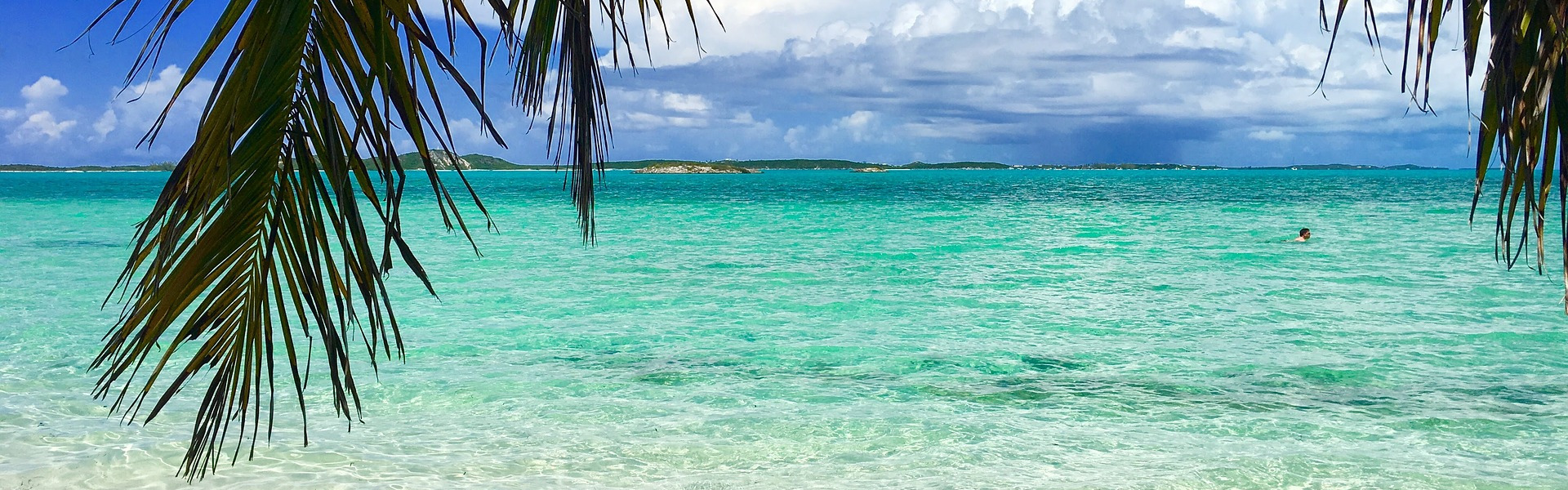
Harbour Island is five kilometres long and a kilometre and a half wide, has eight hundred residents and practically no cars: you get around by golf cart. It lies a few hundred metres off the north coast of Eleuthera, reached by a ten-minute water taxi. Its reputation rests on one thing: a five-kilometre beach whose sand is pink.
The essentials in four lines
- Fly into North Eleuthera (ELH) with a connection from Montreal, then taxi and boat, a ten-minute crossing.
- The Bahamas keep Eastern time, like Montreal, all year. The Bahamian dollar equals one US dollar.
- No rental cars: golf carts, bicycles and walking.
- December to April is the dry season. Hurricane season runs June to November.
Why the sand is pink
The colour comes from a microscopic organism, a foraminifer with a bright red shell that lives beneath the reefs. When it dies, its fragments mix into the white limestone sand. The pink is subtle at midday and becomes distinct at sunrise and sunset, when low light sharpens it and wet sand reveals it.
The beach runs the whole eastern side of the island. A reef lies a few hundred metres offshore and breaks the Atlantic swell: the water stays calm nearly all year despite the exposure. You can walk it end to end in ninety minutes without meeting many people on a weekday.
Dunmore Town
The village was founded in 1791 by loyalists arriving from North America after the American revolution. What remains is a grid of narrow streets and a hundred or so single-storey wooden houses, painted in pale colours, with verandas, shutters and bougainvillea.
It is one of the best-preserved built ensembles in the Bahamas, and it is seen in an hour on foot: the Anglican church of 1768, the fishing dock, the few shops and galleries on Bay Street. At dusk the dock becomes the island’s meeting point.
What to do here
The beach, first, and at length. Then the boat trips: diving on the neighbouring reefs, bonefishing on the sand flats, excursions to the empty cays to the north.
Eleuthera, the large island next door, is covered in a day by rental car. Two stops are worth the trip: the Glass Window Bridge, where a strip of rock ten metres wide separates the dark, agitated Atlantic on the east from the flat turquoise Bahamian water on the west, with the road running between them; and the Queen’s Bath, a series of pools carved into the cliff that the swell fills with warm water.
What to know before booking
Harbour Island is an expensive and discreet destination. There is no all-inclusive resort, no large hotel, no casino, no nightlife beyond two or three addresses. Accommodation consists of about twenty small hotels of ten to forty rooms, and villas, sold by the room.
Meals are taken in the village restaurants, at prices that reflect the island’s isolation: everything arrives by boat. A week here costs well above an all-inclusive in the Dominican Republic at comparable comfort.
In exchange you get an exceptional beach, very low tourist density and a village that has kept its scale. If all-inclusive is your main criterion, our guidance on choosing an all-inclusive hotel will point you to Nassau or to other Caribbean destinations.
When to go
From December to April the air holds around 26 °C and rain is rare, but the water stays cool for the Caribbean, around 23 or 24 degrees in February, and fronts from the mainland can bring a few grey days.
May, June and the first half of December offer the best balance of conditions and price. Our guide on when to travel south from Montreal sets out the calendar.
To plan this trip, see also our Bahamas page, Freeport, Great Exuma and our month-by-month calendar.


