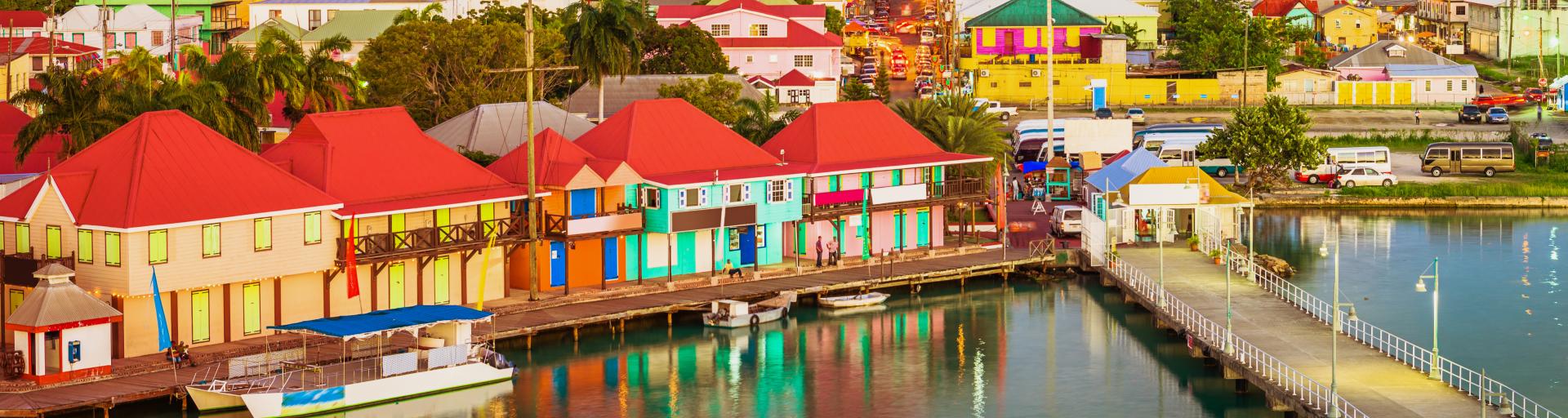
Antigua crosses end to end in an hour, but you do not stay just anywhere on it. The island divides into four coasts that share neither the same sand, nor the same sea, nor the same atmosphere, and the sector you choose decides most of the trip. Here is how it is organised, in practical terms.
The essentials in four lines
- About five hours on a seasonal non-stop from Montreal to V. C. Bird (ANU), twenty to forty minutes from the hotels.
- Driving is on the left. A temporary local permit, issued on the spot for a fee, is required to drive.
- East Caribbean dollar, US dollars accepted everywhere. English is spoken.
- One hour ahead of Montreal in winter, same time in summer.
The four coasts
The northwest
Dickenson Bay and Runaway Bay, twenty minutes from the airport. Pale sand, flat water, water sports, restaurants on foot and the densest cluster of large resorts. It is the most convenient sector for a first stay and the only one where you go out in the evening without a car.
The west
Jolly Harbour, Darkwood, Ffryes and Turners follow one another over fifteen kilometres. Fewer hotels, more public beaches, sunsets facing the volcanic outline of Montserrat. A good compromise between quiet and services.
The south
Around Falmouth and English Harbour the bays turn deep and sheltered: this is the world of sailboats, marina restaurants and small hotels. The beaches are shorter, but the evenings are the liveliest on the island during the sailing season.
The east
The Atlantic side, with Half Moon Bay and Long Bay. Wilder, windier, better to photograph. It is also the side that receives sargassum in some years; the west generally stays clear.
St John’s
The capital has twenty-two thousand residents and is seen in two hours. The Anglican cathedral, its two white towers visible from far off, was rebuilt in 1845 with an inner wooden lining intended to absorb earthquake shocks.
The public market on Saturday morning is the liveliest place on the island: fruit, spices, fish, and a local crowd. Conversely, the cruise piers and their duty-free shops are saturated Monday to Thursday in high season; check the call schedule before going.
English Harbour, in practice
The former Georgian dockyard is the only one in the world still operating and is a UNESCO World Heritage site. Entry is by a single ticket that also covers the Shirley Heights lookout on the hill above.
The gathering not to miss is Sunday late afternoon at Shirley Heights: steel pan orchestra, then a reggae band, barbecue, and the sun dropping behind Montserrat. Arrive before four to get a place at the railing.
Getting around
Taxis charge posted fixed fares by route; agree on the price before getting in and note that fares are quoted in US dollars. Local buses, inexpensive, serve St John’s from the west and south but do not run on Sundays.
Renting a car makes sense for two or three days of exploring: the roads are decent but narrow and sometimes potholed, and you must buy a temporary permit.
Accommodation
The offering is among the most complete in the Lesser Antilles: large family resorts in the north, couples-only properties spread along the whole coast, and a few discreet thirty-room addresses in private bays.
Antigua has an unusual share of upper-tier couples-only all-inclusives, which lifts the standard of the restaurants and the prices alike. Peak periods are the year-end holidays and the regatta week in late April. Our criteria for choosing an all-inclusive hotel set out what to check before booking.
When to go
From December to April the air holds around 28 °C, the trade winds blow and rain is rare: Antigua is one of the driest islands in the arc. From July to October, humidity climbs and the cyclone season peaks.
Carnival fills late July and early August. Our guide on when to travel south from Montreal sets out the pricing calendar.
To plan this trip, see also our Antigua et Barbuda page and how to choose an all-inclusive hotel.


