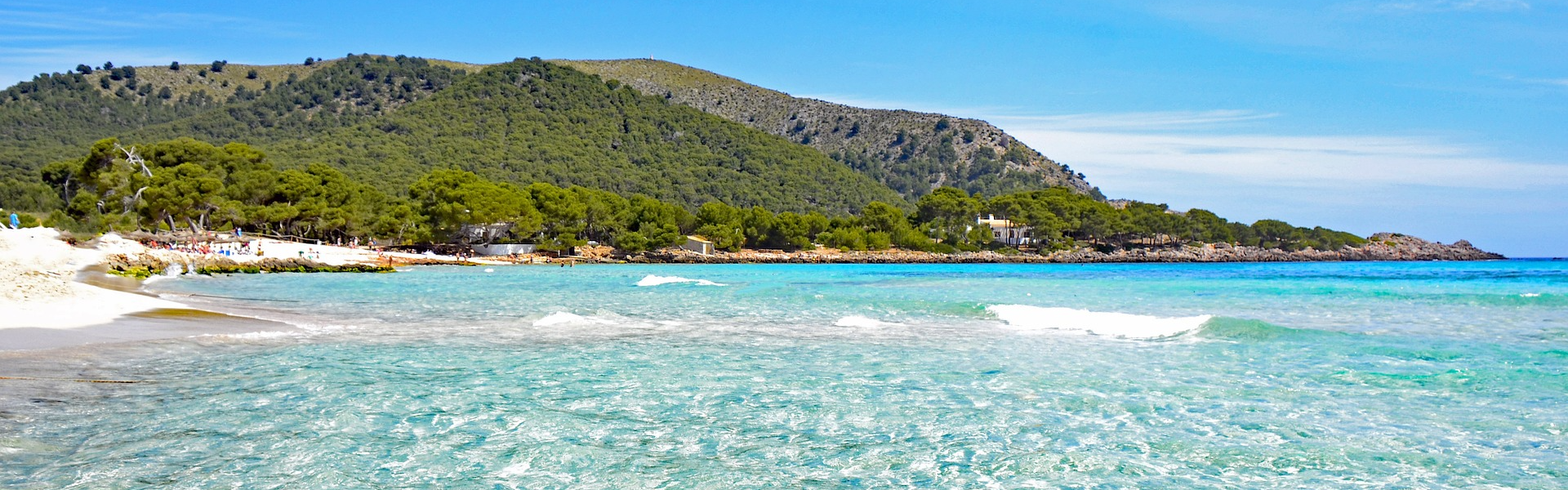
Balearic Islands Travel from Canada: The Complete Guide
The Balearic Islands are four Spanish islands in the Mediterranean, each with its own character: Mallorca the all-rounder, Menorca the quiet one, Ibiza the party island and Formentera the tiny beach escape. Canadian citizens enter without a visa for tourist stays of up to 90 days in the Schengen area. The big news for 2026: Air Canada is launching a seasonal non-stop flight from Montreal to Palma de Mallorca, about 7 h 25 min, four times a week from June 17 to October 23. From Toronto, and outside those dates from Montreal, count on one stop through Madrid, Barcelona or a European hub and 11 to 14 hours of total travel. The time difference is 6 hours in summer, the best windows are May–June and September–October, and a one-week trip for two runs roughly $6,000 to $9,000 CAD in high season, as a guideline. Our advisors build Balearic itineraries for Canadian travellers every week — here is what you need to know.
The essentials at a glance
| Item | At a glance |
|---|
| Flights from Canada | Seasonal Air Canada non-stop Montreal–Palma, about 7 h 25 min (June 17 to October 23, 2026); otherwise one stop, 11 to 14 hours total; from Toronto, connect via Madrid, Barcelona or a European hub |
| Visa for Canadians | None (max 90 days in any 180-day period in Schengen); EES in force, ETIAS not yet required |
| Time difference | +6 hours ahead of Montreal and Toronto in summer |
| Currency | Euro (€); €1 ≈ $1.60 CAD, as a guideline |
| Language | Spanish and Catalan; English widely spoken in tourist areas |
| Best time | May–June and September–October |
| Driving | Right-hand side; a rental car helps on Mallorca and Menorca (book early in summer), bike or scooter on Formentera |
| Power | 230 V, type C/F plugs; adapter required |
Why the Balearic Islands
One archipelago, four personalities, and ferries linking them all: that is the real strength of the Balearics. In a single week you can combine Mallorca's stone villages and the Serra de Tramuntana, Menorca's wild coves, Ibiza's fortified old town and Formentera's turquoise water. Three sites hold UNESCO recognition: the Serra de Tramuntana, the Menorca biosphere reserve and Dalt Vila in Ibiza.
The islands work equally well as a stand-alone trip or as the island chapter of a longer Spain itinerary: connecting flights between Palma and Madrid or Barcelona take just 1 h to 1 h 25 min. With the new Montreal non-stop, the Balearics become one of the simplest Mediterranean gateways for Canadian travellers.
When to go
| Period | Climate and what to know | Verdict |
|---|
| May–June | Fine weather, warming sea, still-reasonable crowds | Excellent choice |
| July–August | Heat, peak crowds and peak prices, especially on Ibiza and Mallorca | High season: book early |
| September–October | Warm sea in September, fewer people, softer prices | Best value |
| November–April | Very quiet; many hotels and seasonal connections close, especially on Formentera and Menorca | For Palma and travellers seeking calm |
The Air Canada non-stop follows the season, operating from mid-June to late October 2026. To enjoy the direct flight without July–August crowds, aim for late June, September or October.
Getting there from Canada
The headline for 2026: Air Canada launches a seasonal non-stop from Montreal (YUL) to Palma de Mallorca (PMI) on an Airbus A321XLR, four times a week from June 17 to October 23, 2026, with a flight time of about 7 h 25 min. It is the first direct link between Montreal and the Balearics; confirm the selling calendar with your advisor, since seasonal schedules evolve.
From Toronto, or outside the direct flight's season, plan on one stop. Two approaches work well: an Air Transat non-stop from Montreal to Barcelona (from about $609 CAD return, as a guideline) or Madrid (about $610 CAD), followed by a 1 h to 1 h 25 min connection to Palma on Iberia, Vueling or Air Europa; or a routing through a European hub such as Paris, Frankfurt, Lisbon, Zurich, Amsterdam or London. Total travel time with a stop runs 11 to 14 hours. Toronto departures typically route through Madrid, Barcelona or one of those same hubs; ask your advisor for the best current option.
Menorca (MAH) and Ibiza (IBZ) have no direct service from Canada: connect through Palma, Barcelona, Madrid or a European hub. Formentera has no airport at all; access is by ferry from Ibiza only.
The four islands to know
Ferries make island-hopping easy. Baleària and Trasmed run the main routes: Palma–Ibiza in 2 h 15 min (fast ferry) to about 4 hours, from around €24 per adult; Mallorca–Menorca (notably Alcúdia–Ciutadella) in 1 h 30 min to 2 h 30 min; and Ibiza–Formentera shuttles of 30 to 35 minutes running all day. Sailings are daily in summer and reduced in winter; book ahead for July and August.
Mallorca
The largest and most complete of the four. Palma, the capital, combines a landmark cathedral, old quarters and excellent food; the UNESCO-listed Serra de Tramuntana strings together stone villages like Valldemossa, Sóller and Deià; and the coastline is cut with coves, the famous calas. It is also a renowned cycling and hiking destination. Mallorca suits every profile, from families to athletes, and it is the best-served island from Canada thanks to the new Montreal non-stop.
Menorca
The quietest island, and a UNESCO biosphere reserve in its entirety. Travellers come for beaches ranked among the Mediterranean's finest, such as Cala Macarella and Cala Turqueta, and for the Camí de Cavalls, the coastal path that circles the island. The mood is family-friendly and nature-first, far from the big crowds. One caution for winter: many hotels and connections close from November to April.
Ibiza
Its reputation as the clubbing capital is earned, but it is only part of the story. Dalt Vila, the UNESCO-listed fortified old town, towers over the harbour; the island also hides superb coves and a bohemian interior of villages and markets. Off season, Ibiza turns surprisingly peaceful. It is also the mandatory gateway to Formentera, a 30-minute ferry ride away.
Formentera
The smallest of the four, with no airport, reachable only by sea from Ibiza. Its beaches, led by Ses Illetes, look Caribbean with their pale sand and turquoise water. Explore by bike or scooter, either on a day trip from Ibiza or as a quiet stay of a few nights. Along with Ibiza it is the most expensive island, so book accommodation early.
Budget, in Canadian dollars
| Item | Range (as a guideline, high season) |
|---|
| Return flight Montreal–Palma | From about $900 CAD with a stop in low season; $1,200 to $1,800 CAD in summer |
| Mid-range hotel | $200 to $400 CAD per night in summer; less in May and October |
| Meals | $60 to $100 CAD per day per person (set lunch menu $20 to $30 CAD, restaurant dinner $40 to $70 CAD) |
| Transport and activities | Car rental $50 to $100 CAD per day, scooter $40 to $60 CAD; Palma–Ibiza ferry from about $40 CAD |
| One week for 2 people | About $6,000 to $9,000 CAD (flights, mid-range hotel, meals, rental, ferries); $4,500 to $5,500 CAD off peak |
Add the Balearic tourist tax (the "ecotasa"), paid locally per person aged 16 and over, per night. In high season (May 1 to October 31): €4.40 in a 5-star hotel, €3.30 in a 4-star, €2.20 in a 3-star or licensed tourist apartment, €1.10 in hostels and campgrounds, 10% VAT included. From November to April the tax drops by 75%, and a 50% reduction applies from the 9th consecutive night in the same property. An increase has been discussed for 2026 but had not been adopted; confirm the amounts when you book.
Entry requirements and health for Canadian citizens
- Passport: valid for at least 3 months beyond your planned departure from the Schengen area and issued within the last 10 years.
- Visa: none required for tourist stays of 90 days or less in any 180-day period, counted cumulatively across the whole Schengen area.
- EES: the European Entry/Exit System is fully in force since April 2026. It replaces passport stamps with a facial photo and fingerprints on first entry. Nothing to do in advance, but allow extra time at border control.
- ETIAS: not yet required as of July 2026. Launch is planned for late 2026 with a transition period; the announced fee is about €20. Check the program's status before you travel.
- Health: no specific requirements flagged; have your routine vaccinations reviewed by a travel clinic. Local emergency number: 112.
- Travel insurance: strongly recommended, as provincial health plans cover only part of medical costs abroad.
- Official advisory: the Government of Canada advises exercising a "high degree of caution" in Spain (terrorism threat in Europe, pickpockets in tourist areas). Check travel.gc.ca before departure.
Our advice, after sending hundreds of clients
Book the Montreal non-stop as soon as it goes on sale: four weekly frequencies on a single carrier sell out fast, and the direct flight will likely command a premium over one-stop routings. On a tighter budget, the Air Transat combination through Barcelona or Madrid plus a short domestic hop remains very efficient, and it is usually the best play from Toronto as well. In one week, stick to two islands: Mallorca with Menorca for nature and families, or Ibiza with Formentera for beaches and nightlife. Reserve your rental car and ferries ahead for July and August, and build the tourist tax into your hotel budget. September is the archipelago's worst-kept secret: warm sea, softer prices and the direct flight still operating until late October. Many clients also pair the islands with a few days in Barcelona or Madrid as part of a broader trip to Spain.
Ready to plan your Balearic Islands trip? Talk to an advisor who knows the ground — free of charge and with no obligation. 450-628-6241 | 1-866-628-6241 | info@voyagesaquaterra.com — More than 950 advisors across Quebec.
Voyages AquaTerra holds a Québec travel agency permit.
Frequently Asked Questions About the Balearic Islands
Do Canadians need a visa for the Balearic Islands?
No visa is needed: Canadian citizens can visit the Balearics for tourist stays of up to 90 days in any 180-day period across the Schengen area. Your passport must be valid for at least 3 months beyond your planned exit and issued within the last 10 years. The EES border system (photo and fingerprints on first entry) is in force, and ETIAS was not yet required as of July 2026.
How long is the flight from Canada to the Balearic Islands?
Air Canada's new seasonal non-stop links Montreal to Palma de Mallorca in about 7 h 25 min, four times a week from June 17 to October 23, 2026. From Toronto, or outside those dates, one-stop routings through Madrid, Barcelona or a European hub take 11 to 14 hours in total.
When is the best time to visit the Balearic Islands?
May–June and September–October combine fine weather, thinner crowds and softer prices, and the sea is at its warmest in September. July and August are peak season, with maximum crowds and prices, especially on Ibiza and Mallorca. From November to April many hotels and connections close, notably on Formentera and Menorca.
Are the Balearic Islands safe?
The Government of Canada advises exercising a "high degree of caution" in Spain, mainly because of the terrorism threat in Europe and pickpocketing in tourist areas. Watch your belongings in busy spots in Palma and Ibiza. The local emergency number is 112, and travel insurance is strongly recommended.
How much does a week in the Balearic Islands cost?
As a guideline, one week for two people in summer runs about $6,000 to $9,000 CAD, including flights, a mid-range hotel, meals, a rental and ferries. Off peak, a budget version can come in around $4,500 to $5,500 CAD. Formentera and Ibiza are the most expensive islands.
What is the time difference between Canada and the Balearic Islands?
The Balearics run on Central European Time, 6 hours ahead of Montreal and Toronto in summer. When it is noon in Montreal, it is 6 p.m. in Palma. Most travellers adjust within a day or two.
What is the Balearic Islands tourist tax?
The "ecotasa" is paid locally, per person aged 16 and over, per night. In high season (May to October) it ranges from €1.10 in hostels to €4.40 in 5-star hotels, VAT included; it drops by 75% from November to April, and by 50% from the 9th consecutive night in the same property. A proposed 2026 increase had not been adopted at the time of writing.
How do you travel between Mallorca, Menorca, Ibiza and Formentera?
By ferry, mainly with Baleària and Trasmed. Palma–Ibiza takes 2 h 15 min to about 4 hours (from around €24), Mallorca–Menorca 1 h 30 min to 2 h 30 min (notably Alcúdia–Ciutadella), and Ibiza–Formentera 30 to 35 minutes with frequent shuttles. Book ahead in July and August.
Which Balearic island should I choose?
Mallorca is the best starting point: the largest, the most varied and the only island with a non-stop flight from Canada. Pick Menorca for calm and families, Ibiza for nightlife and the old town of Dalt Vila, and Formentera for Caribbean-style beaches on a day trip from Ibiza.
Does Formentera have an airport?
No. Formentera is reached only by ferry from Ibiza, a crossing of 30 to 35 minutes with frequent departures all day in summer. Once there, the island is best explored by bike or scooter, on a day trip or a quiet stay.