Departure

Return


Loading

New Delhi Travel from Canada: The Complete Guide

New Delhi is one of the easiest Indian cities to reach from Canada: Air Canada flies nonstop from Toronto daily (about 14 to 15 hours) and from Montréal up to five times a week (about 14 hours), with Air India also serving Toronto nonstop. Canadian citizens need a visa, issued online as an e-Tourist Visa within a few days. The capital is at its best from October to March, when the weather is dry and mild. Two cities share the map here: Mughal-era Old Delhi, dense and fascinating, and the broad-avenued New Delhi laid out by the British. It is also the natural starting point of the Golden Triangle, with the Taj Mahal under two hours away by express train. As a guideline, budget 2,100 to 3,400 CAD per person for a week, flights included.

The essentials at a glance

QuestionAnswer
Flight from CanadaNonstop from Toronto (Air Canada, Air India, about 14-15 h) and Montréal (Air Canada, about 14 h)
Visa for CanadiansYes: e-Tourist Visa applied for online before departure
Time difference+9 h 30 in summer, +10 h 30 in winter; India never changes its clocks
CurrencyIndian rupee (INR); 100 rupees are worth about 1.60 CAD
LanguageHindi and English; English is understood in hotels, restaurants and tourist sites
Best time to goOctober to March; extreme heat April to June, monsoon July to September
DrivingOn the left; metro, app-based taxis and cars with drivers beat getting behind the wheel
Electricity230 V, 50 Hz, plug types C, D and M; adapter required

Why New Delhi

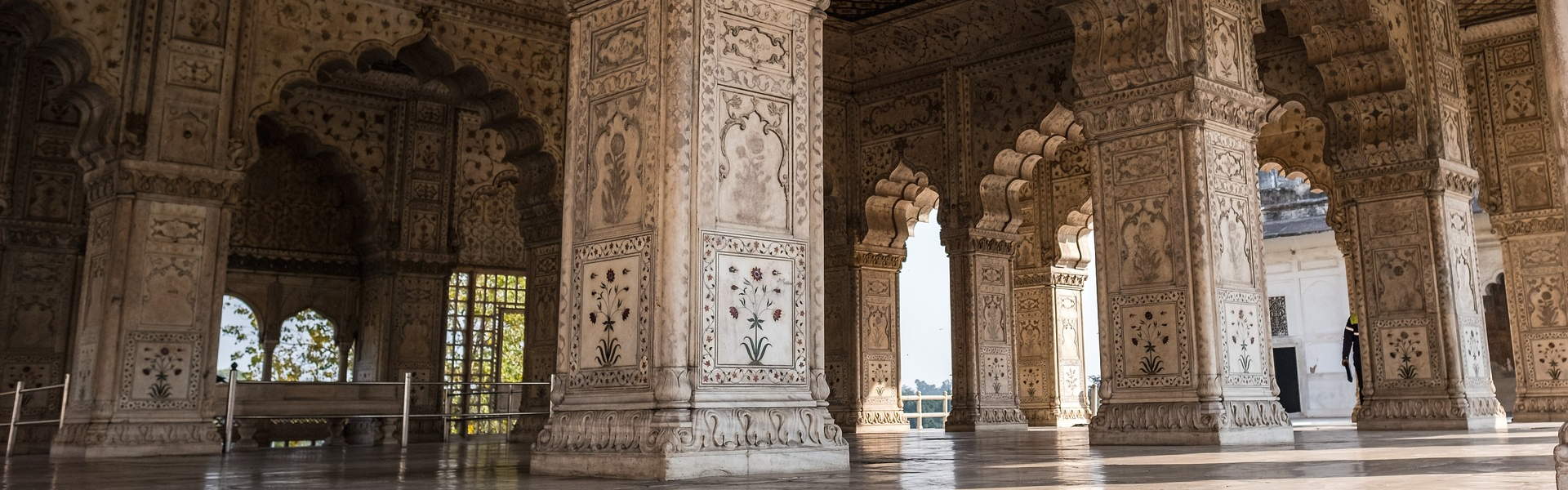
Delhi packs a millennium of Indian history into one city. Three UNESCO World Heritage sites can be covered in two days: the Red Fort, sandstone stronghold of the Mughal emperors, Humayun's Tomb, which inspired the Taj Mahal, and the Qutub Minar, a 73-metre minaret raised in the 12th century. In between, the modern city spreads its tree-lined avenues around India Gate, a legacy of 1920s British town planning.

The contrast between the two Delhis is the trip's real flavour. In the morning, a rickshaw ride through Chandni Chowk plunges you into a maze of spice stalls, jewellers and temples, with the great Jama Masjid mosque as a backdrop. By afternoon, the national museums, Lodhi Gardens and the cafés of Khan Market bring the volume back down. Few capitals let you swing that far in a single day of walking and metro rides.

Delhi's position makes it the best base for northern India. Agra and the Taj Mahal sit 100 minutes away by fast train, Jaipur about 4 h 30 by road, and the airport connects the whole subcontinent at gentle fares. A first Indian trip logically starts here, before Rajasthan or a beach break in Goa.

When to go

PeriodClimate and atmosphereVerdict
OctoberDry weather returns, 25 to 32 °C, autumn festivalsExcellent
NovemberPleasant temperatures, but frequent smog episodes after DiwaliGood, with caveats
December to JanuaryMild days (15 to 22 °C), cool and foggy morningsVery good
February to MarchDry, bright weather, 20 to 30 °C, gardens in bloomThe best window
April to JuneCrushing heat, often above 40 °CAvoid
July to SeptemberMonsoon: humid heat, heavy but often brief downpoursDoable, at low prices

How to get there from Canada

From Toronto Pearson, Air Canada's Boeing 777 flies to Delhi daily, and Air India operates its own nonstop service; eastbound flights take roughly 14 to 15 hours, with longer returns due to the detour around Russian airspace. From Montréal-Trudeau, Air Canada's 787-9 leaves late in the evening and lands in Delhi the next day after about 14 hours, up to five times weekly depending on season. On other days, a single stop via Paris (Air France), Frankfurt (Lufthansa), Doha (Qatar Airways) or Dubai (Emirates) brings the total journey to 18 or 20 hours.

You arrive at Terminal 3 of Indira Gandhi International, one of Asia's most modern hubs. The Airport Express metro reaches the city centre in about twenty minutes for under a dollar, and prepaid taxi counters spare you any late-night haggling. Delhi then works as a hub in its own right: fast trains to Agra, and domestic flights to Mumbai, Goa, Udaipur or Kerala, most under 150 CAD.

New Delhi's neighbourhoods and must-sees

Old Delhi

Shahjahanabad, the walled city founded by Emperor Shah Jahan in the 17th century, remains the capital's beating heart. Visit the Red Fort early, before the heat and the crowds build. Next door, the Jama Masjid, one of India's largest mosques, overlooks the Chandni Chowk bazaar: climb into a cycle-rickshaw and let it carry you through lanes of spice merchants and sari shops. A paratha lunch in Paranthe Wali Gali is part of the experience.

Lutyens' New Delhi

To the south, the imperial Delhi of the 1920s lines up India Gate, the presidential palace Rashtrapati Bhavan and broad ceremonial avenues. The National Museum deserves two hours for its Chola bronzes and Mughal miniatures. At dusk, the lawns around India Gate fill with picnicking families: the best spot to watch the city unwind.

Humayun's Tomb and Nizamuddin

This red sandstone and marble mausoleum, completed in 1572, prefigures the Taj Mahal by 80 years; its Mughal gardens make it one of the city's most peaceful corners. Close by, the Sufi quarter of Nizamuddin comes alive on Thursday evenings with qawwali singing around the shrine. Together they fill a rewarding half day.

Qutub Minar and Mehrauli

In the city's south, the 73-metre Qutub Minar, begun in 1193, marks the dawn of Indo-Islamic architecture. The surrounding Mehrauli Archaeological Park hides tombs, mosques and stepwells you can explore almost alone. Pair it with the shops and cafés of nearby Champa Gali to round out the afternoon.

South Delhi

Hauz Khas Village mixes 14th-century ruins, a lake, galleries and fashionable restaurants: the meeting point of the capital's young professionals. Nearby, the Lotus Temple, a white marble flower open to all faiths (closed Mondays), and Lodhi Gardens, the city's finest morning walk among medieval tombs and old banyans, complete the picture.

The Agra and Taj Mahal day trip

The Gatimaan Express leaves Hazrat Nizamuddin station in the morning and reaches Agra in about 100 minutes. The Taj Mahal (closed Fridays) is best seen right at opening time, before touring Agra Fort. One day covers the essentials; an overnight stay adds Fatehpur Sikri, Akbar's abandoned capital, on the way back or onward to Jaipur.

The budget, in Canadian dollars

ItemBudgetMid-rangeHigh-end
Round-trip flight from Montréal or Toronto$1,300 - $1,700$1,700 - $2,400$4,500 and up (business)
Accommodation (per night, 2 people)$50 - $90$120 - $250$350 - $900
Meals (per day, per person)$12 - $20$25 - $50$70 - $140
Local transport (per day)$3 - $8 (metro)$15 - $40$80 - $150 (car with driver)
Activities and sightseeing (per day)$5 - $15$20 - $50$80 - $150

These ranges are indicative, based on rates and prices observed in 2025-2026. Entry tickets to the major monuments run 10 to 20 CAD for foreign visitors, and hotel prices peak from December to February.

Entry requirements and health for Canadian citizens

  • Visa: required. The e-Tourist Visa (30 days, 1 year or 5 years) is applied for on the official site indianvisaonline.gov.in, at least 4 days before departure.
  • Passport: valid for at least 6 months beyond arrival, with two blank pages.
  • e-Arrival Card: since October 2025, the electronic arrival card must be completed online within 72 hours before landing in India.
  • Official advisory: the Government of Canada advises a high degree of caution in India. Delhi carries no specific regional warning; stay alert to pickpockets and tourist-targeted scams. Details at travel.gc.ca.
  • Health: hepatitis A and typhoid vaccines are recommended; dengue circulates during and after the monsoon. Drink only sealed bottled water and see a travel clinic before departure.
  • Air quality: from late October to December, smog can turn severe; sensitive travellers should pack filtering masks and follow the air quality index.
  • Travel insurance: full medical and repatriation coverage is essential; Delhi's private hospitals are good but require a payment guarantee.

One last tip: give Delhi itself three or four nights, then continue to Agra and Jaipur to close the Golden Triangle within a week. With two weeks, add Rajasthan or a beach contrast in Goa via a short domestic flight.

Ready to see the Red Fort and the Taj Mahal in the same week? The advisors at Voyages AquaTerra build your tailor-made itinerary. 450-628-6241 | 1-866-628-6241 | info@voyagesaquaterra.com

Voyages AquaTerra is a licensed Quebec travel agency.

Frequently Asked Questions

Yes. A visa is required for India: the e-Tourist Visa (30 days, 1 year or 5 years) is applied for online at indianvisaonline.gov.in before departure. Your passport must remain valid for 6 months beyond arrival, with two blank pages.
Air Canada flies nonstop from Toronto daily in roughly 14 to 15 hours, with Air India also serving the route, and from Montréal in about 14 hours up to five times weekly. Return flights run longer because aircraft detour around Russian airspace.
October to March, ideally February-March or October, when the weather is dry and mild. November often brings heavy smog, December and January cool foggy mornings, and summer temperatures above 40 °C.
The Government of Canada advises a high degree of caution in India. In Delhi the main risks are pickpocketing, tourist-targeted scams and reported harassment of women; the tourist areas are fine to visit with normal vigilance. Check travel.gc.ca before you go.
As a guideline, plan on 2,100 to 3,400 CAD per person for one week including flights, at a comfortable mid-range level. On the ground the city is very affordable: a good hotel under 200 CAD a night and a full meal under 15 CAD.
Delhi runs on India Standard Time (UTC+5:30) all year. That puts it 9 h 30 ahead of Montréal and Toronto in summer (daylight time) and 10 h 30 ahead in winter (standard time).
Yes, it is the classic excursion. The Gatimaan Express reaches Agra in about 100 minutes from Hazrat Nizamuddin station, and the expressway drive takes 3 to 4 hours. The Taj Mahal is closed on Fridays; leave at dawn for the light and thinner crowds.
The metro is extensive, air-conditioned, cheap and includes a women-only car at the front of each train. The Airport Express links the airport to the centre in about twenty minutes. Otherwise, Uber and Ola apps spare you haggling over every auto-rickshaw ride.
Air quality deteriorates mainly from late October to December, when smog and crop-burning season combine. Travellers with asthma or sensitivities should aim for February-March, watch the air quality index and pack filtering masks for bad days.
Connaught Place and its surroundings offer the best central compromise, well served by the metro. Aerocity, near the airport, lines up reliable international hotels handy for a first night. South Delhi around Hauz Khas appeals for its restaurants and residential feel.
  • #Travel
  • #Tourism
  • #City
  • #Uttar Pradesh
  • #Visit
  • #Monuments
  • #History
  • #Culture
  • #Food
  • #Neighborhoods
  • #Shopping
  • #Transportation
  • #Budget
  • #Best Time
  • #Climate
  • #Attractions
  • #Accommodation
  • #Airport
  • #What to Do
  • #Tips
  • #Travel Information
  • #New Delhi Guide
  • #Experience
  • #Photos
  • #Tourist Circuit
  • #Visa
  • #Formalities
  • #Duration of Stay.