Departure

Return


Loading

Helsinki Travel from Canada: The Complete Guide

Helsinki, Finland's seaside capital, is easier to reach from Canada than ever: since May 4, 2026, Finnair operates a seasonal nonstop from Toronto (YYZ), about 8.5 to 9 hours eastbound, while flights from Montreal (YUL) connect once en route, with roughly 8.5 to 11 hours of flying time. Canadian citizens need no visa for stays of up to 90 days in the Schengen area. The best time to visit runs from late May to early September, with very long days and temperatures of 15 to 25 C. Helsinki is 7 hours ahead of Montreal and Toronto. The currency is the euro (1 EUR was worth about $1.62 CAD in July 2026), and card payment is accepted almost everywhere. As a guideline, budget about $120 to $380 CAD per person per day, excluding flights.

The essentials at a glance

Key fact What to know
Flights from Montréal/Toronto Montréal: no nonstop, 1 connection, about 8.5 to 11 h of flying time. Toronto: seasonal Finnair nonstop (summer 2026), about 8.5 to 9 h
Visa and entry rules No visa (Schengen): maximum 90 days in any 180-day period
Time difference 7 hours ahead of Montréal and Toronto
Currency Euro (EUR); 1 EUR was about $1.62 CAD in July 2026; cards accepted almost everywhere
Language Finnish and Swedish; English is generally well understood
Best time to go Late May to early September
Driving On the right, as in Canada
Electricity 230 V, European-style plugs: adapter required

Why Helsinki

Helsinki is a maritime capital on a human scale. The centre is highly walkable, the HSL trams cover the rest, and the sea is never far: Market Square opens directly onto the harbour, and the UNESCO-listed sea fortress of Suomenlinna is a 15-to-20-minute public ferry ride away. Few European capitals make an island excursion this easy to fit into a single day.

The city is also a world reference for design. The Design District, centred on the Punavuori neighbourhood, concentrates Finnish design, and Temppeliaukio Church, carved directly into bedrock, is one of the country's most distinctive sights. The other local signature is sauna culture, alive year-round in modern public saunas such as Löyly and the Allas Sea Pool, facing the harbour.

Finally, Helsinki can be visited without the crush: even in June and July, crowds stay very manageable compared with southern Europe. The Government of Canada rates Finland at its lowest risk level. It is also the natural gateway to a wider trip through Finland.

When to go

Period Climate Notes
Late May to early September 15 to 25 C, very long days The ideal window: terraces, the archipelago, white nights around the solstice
June and July Peak summer High season, but crowds remain very manageable compared with southern Europe
December to March Cold, under 6 hours of daylight in December Christmas markets and saunas; very short days

One point worth clarifying: Helsinki is not a northern lights destination. The city sits too far south and has too much light pollution; auroras are mainly seen in Lapland (Rovaniemi, Ivalo), roughly 800 to 1,100 km to the north. If auroras are your goal, plan a Lapland leg in the itinerary, which is easy to arrange from Helsinki.

Getting there from Canada

From Toronto, Finnair reopened its nonstop route to Helsinki on May 4, 2026, after an 11-year absence. The flight operates three times a week (Monday, Wednesday and Sunday) for the summer 2026 season and takes about 8.5 to 9 hours eastbound. Outside the season, connections run through the usual European hubs.

From Montreal, there is no nonstop service: the trip involves one connection, typically through Reykjavik (Icelandair), Dublin, Copenhagen, Amsterdam, Frankfurt or Brussels. Carriers include Air Canada and its partners, Finnair via a partner hub, Icelandair, Lufthansa and KLM. Expect roughly 8.5 to 11 hours of flying time, not counting the layover. Depending on dates and fares, routing through Toronto for the nonstop can be worth comparing.

Helsinki's highlights

Senate Square and the historic centre

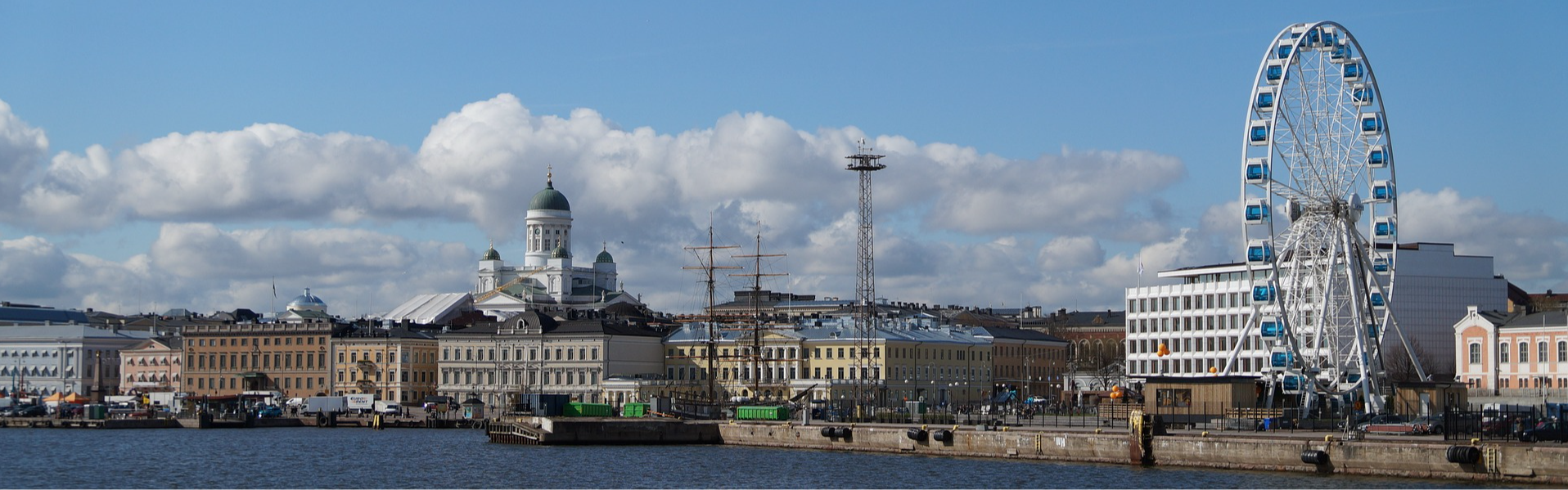
Helsinki's historic core is organized around Senate Square, dominated by the white cathedral, the city's best-known image. The centre is highly walkable: Senate Square, the waterfront and Market Square are all within a few minutes of each other on foot, with no need for taxis.

Suomenlinna, the sea fortress

Built across a cluster of islands at the harbour entrance, Suomenlinna is a UNESCO World Heritage site. The public HSL ferry from Market Square takes 15 to 20 minutes, and a regular transit ticket covers the ride. It is Helsinki's classic number-one excursion: ramparts, Baltic viewpoints and, weather permitting, a picnic.

The Design District and Temppeliaukio

The Design District, centred on Punavuori, concentrates Finnish design and is the neighbourhood to wander to understand why Finland sets the standard in the field. Pair it with Temppeliaukio Church, excavated straight into the rock, a short but memorable visit a few tram stops from the centre.

Sauna culture: Löyly and Allas Sea Pool

The sauna is Helsinki's signature experience, available year-round. Two modern public addresses set the benchmark: Löyly and the Allas Sea Pool, which faces the harbour. Visitors alternate between heat and sea air, winter and summer alike. Even for first-timers, the experience is approachable and well organized.

Kallio and the waterfront

To step off the classic circuit, Kallio is the city's trendy, affordable neighbourhood. The waterfront invites unhurried walking, with Market Square as its anchor point and the departure point for the Suomenlinna ferry.

Getting around: the HSL tram

The tram network is the emblematic way to see Helsinki. HSL tickets are valid on trams, the metro, buses and the Suomenlinna ferry, which keeps the logistics simple. Combined with a highly walkable centre, it makes a car unnecessary for a city stay.

The budget, in Canadian dollars

Travel style Per day, per person (excluding flights) What it covers
Budget $120 to $160 CAD Hostel, lunches under 10 EUR, public transit
Mid-range $280 to $380 CAD 3-star hotel, restaurants, activities
Comfort $550 CAD and up 4-5 star hotel, fine dining, private excursions

These figures are a guideline only: Helsinki is an expensive city, on par with the other Nordic capitals. Card payment is nearly universal in Finland and cash is rarely needed. Lunches under 10 EUR remain the best way to keep meal costs in check.

Entry requirements and health for Canadian citizens

  • Passport: valid for at least 3 months beyond your planned departure date from the Schengen area.
  • Visa: none required; maximum stay of 90 days in any 180-day period, counting all Schengen countries combined.
  • EES: the European Entry/Exit System is in effect. Nothing to do before departure: photo and fingerprints are collected at the border; allow a little extra time on arrival.
  • ETIAS: not yet in effect as of July 2026 (launch planned for the last quarter of 2026, followed by a transition period). No steps to take for now; when it launches, use only the official European Union website.
  • Vaccines: routine vaccines up to date; hepatitis B recommended; tick-borne encephalitis vaccine worth considering for outdoor activities from April to November.
  • Travel insurance: strongly recommended, including medical evacuation coverage.
  • Official advice: check travel.gc.ca before departure. Finland is rated "Take normal security precautions," the lowest level.

One last tip: book early for the summer high season and keep one flexible day for Suomenlinna, so you can pick the best weather window of your stay.

Ready to see Helsinki for yourself? An AquaTerra advisor can compare the Toronto nonstop with connecting options from Montreal, book your hotels and extend the itinerary elsewhere in Finland, including Lapland. 450-628-6241 | 1-866-628-6241 | info@voyagesaquaterra.com

Voyages AquaTerra holds a Québec travel agency permit.

Frequently Asked Questions

No. Finland is part of the Schengen area: Canadians can stay visa-free for up to 90 days in any 180-day period, counting all Schengen countries combined. Your passport must be valid for at least 3 months beyond your planned departure from the Schengen area. The EES system records a photo and fingerprints at the border, with nothing to do before you leave.
From Toronto, Finnair's seasonal nonstop takes about 8.5 to 9 hours eastbound. From Montreal, there is no nonstop: expect one connection and roughly 8.5 to 11 hours of flying time, not counting the layover, typically via Reykjavik, Dublin, Copenhagen, Amsterdam, Frankfurt or Brussels.
Yes, seasonally. Since May 4, 2026, Finnair operates a nonstop between Toronto (YYZ) and Helsinki three times a week (Monday, Wednesday and Sunday) for the summer 2026 season, marking the airline's return to Toronto after 11 years. There is no nonstop from Montreal.
Late May to early September: days are very long, with white nights around the solstice, and temperatures range from 15 to 25 C. June and July are the tourist peak, but crowds remain very manageable compared with southern Europe. Winter offers Christmas markets and saunas, with under 6 hours of daylight in December.
Yes. The Government of Canada rates Finland at "Take normal security precautions," its lowest risk level. Healthcare is excellent; travel insurance with medical evacuation coverage is still recommended.
As a guideline, per person and excluding flights: $120 to $160 CAD per day on a budget, $280 to $380 CAD mid-range, and $550 CAD and up for comfort. Helsinki is an expensive city, on par with other Nordic capitals; lunches under 10 EUR help keep costs down.
Helsinki is 7 hours ahead of Montreal and Toronto for most of the year: when it is noon in Montreal, it is 7 p.m. in Helsinki. Brief transition periods occur around the clock changes.
Rarely. Helsinki sits too far south and has too much light pollution to be an aurora destination. The northern lights are mainly seen in Finnish Lapland, around Rovaniemi or Ivalo, roughly 800 to 1,100 km north of Helsinki. To see auroras, add a Lapland leg to your itinerary.
By the public HSL ferry from Market Square: the crossing takes 15 to 20 minutes and a regular transit ticket covers it. Suomenlinna, a UNESCO World Heritage site, is Helsinki's classic number-one excursion.
The centre is highly walkable and the HSL tram network is the emblematic way to see the city. HSL tickets are valid on trams, the metro, buses and the Suomenlinna ferry. A car is unnecessary for a city stay, and card payment is accepted almost everywhere.
  • #Travel
  • #Destinations
  • #Vacations
  • #Flights
  • #Bookings
  • #Itineraries
  • #Visas
  • #Formalities
  • #Embassies
  • #Tourism
  • #Tourists
  • #Finnish Currency
  • #Finnish Culture
  • #Finnish History
  • #Points of Interest
  • #Neighborhoods
  • #Restaurants
  • #Hotels
  • #Transportation
  • #Activities
  • #Museums
  • #Attractions
  • #Temperature
  • #Weather
  • #Climate
  • #Finnish Language
  • #Events
  • #Festivals.