Departure

Return


Loading

Beijing Travel from Canada: The Complete Guide

Good news for 2026: Canadian citizens no longer need a visa for tourist stays of 30 days or less in mainland China, under an exemption in effect from February 17 to December 31, 2026. There is no nonstop flight from Montréal (YUL) to Beijing, and Air Canada has no nonstop from Toronto (YYZ) in summer 2026 either; the airline serves Beijing daily via Vancouver, and total journeys from Montréal typically take 18 to 23 hours with one stop. The best months to visit are September through early November, when skies are clear and the air is dry; April and May are a good second choice. As a guideline, plan on roughly 75 to 125 CAD per person per day on a tight budget and 185 to 250 CAD mid-range. One rule to know right away: the Forbidden City requires an online reservation, released only 7 days before your visit date, with your passport. Here is everything you need to plan your Beijing trip.

The essentials at a glance

Key fact What to know
Flights from Montréal/Toronto No nonstop from either city on Air Canada in summer 2026; daily Vancouver-Beijing service; about 18 to 23 h total from Montréal with one stop
Visa 30-day visa exemption for Canadians (in effect until December 31, 2026); passport valid at least 6 months on entry
Time difference +12 h in summer, +13 h in winter vs. Montréal and Toronto (all of China runs on Beijing time)
Currency Chinese yuan renminbi (CNY); 1 CAD ≈ 4.82 CNY (July 2026)
Language Mandarin; English is generally limited outside hotels and major sites
Best time to visit September to early November; April and May as a second choice
Driving Right-hand side
Electricity 220 V; Canadian devices need an adapter

Why Beijing

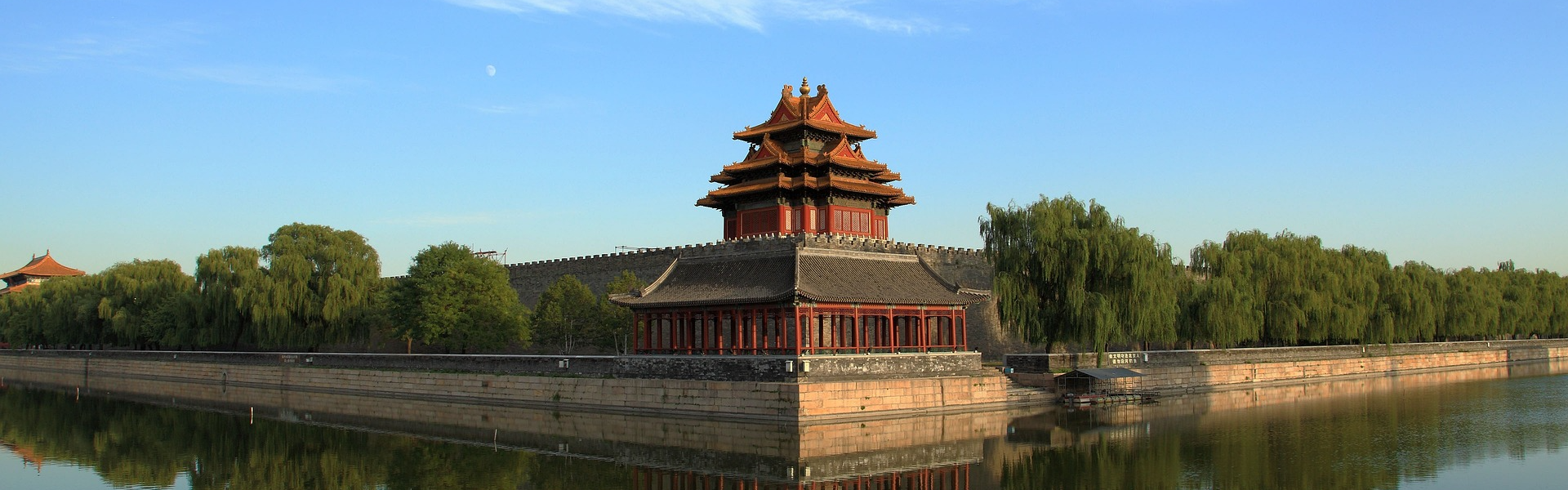
Beijing gathers the most famous sights in China: the Forbidden City, Tian'anmen Square, the Temple of Heaven and, within a day trip, the Great Wall. Imperial history here is something you walk through, a few stops apart on an extensive, inexpensive metro, while the hutong lanes offer a lively counterpoint to the great monuments.

The city also works very well as part of a two-city trip: the high-speed train links Beijing and Shanghai in about 4.5 hours on the fastest services, with second-class tickets at roughly 120 to 145 CAD as a guideline. You can see both of China's great cities in a single trip, without a domestic flight.

Once you are there, Beijing stays affordable: Forbidden City admission runs about 8 to 12 CAD, the metro costs little, and neighbourhood restaurants in the hutongs keep meals inexpensive. Available estimates even place Beijing slightly below Shanghai on daily costs.

When to go

Season Climate Notes
September to early November Clear skies, dry air, fall foliage The best window, especially on the Great Wall
April and May Mild Possible sand-laden winds in very early spring
June to August Hot (30 to 35 °C), humid, thunderstorms Peak domestic travel season; residual rain effects possible in August
December to March Dry cold, often below 0 °C Sites are far less crowded

Unlike China's coastal cities, Beijing is not exposed to typhoons. If you can, avoid the major Chinese holidays, such as Golden Week starting October 1 and Spring Festival: crowds swell and prices rise. Winter is cold but dry, and appeals to travellers who prefer quiet sites.

Getting there from Canada

There is no nonstop flight from Montréal (YUL) to Beijing, and Air Canada does not fly nonstop from Toronto (YYZ) to Beijing in summer 2026. The simplest routing goes through Vancouver, where Air Canada operates a daily Vancouver-Beijing (PEK) flight in summer 2026. Other options connect through Asian hubs or pair a flight to another Chinese city with a domestic connection. From Montréal, plan on about 18 to 23 hours of total travel time.

A practical alternative: fly nonstop from Toronto to Shanghai, a route Air Canada resumed in June 2026 with four weekly flights of roughly 15.5 to 16 hours, then take the high-speed train to Beijing in about 4.5 hours. This works especially well for an itinerary combining the two cities.

Beijing's must-sees

The Forbidden City and Tian'anmen Square

Plan your Forbidden City (Palace Museum) visit before you leave home: online reservation is mandatory and opens only 7 days before your visit date, with no same-day tickets sold on site. The daily quota is 40,000 visitors and tickets sell out fast in high season. Your passport is required both to book and to enter. Admission is ¥60 from April to October and ¥40 from November to March, about 8 to 12 CAD; the site is closed on Mondays except public holidays. The official website, dpm.org.cn, has an English interface. Note that Tian'anmen Square itself now also requires advance reservation, with identity checks, so build it into the same day as the Forbidden City.

The Great Wall: Badaling or Mutianyu

Two sections work well as a day trip from Beijing. Badaling is the most developed and can be reached by suburban train; online ticket booking with your passport is required there. Mutianyu, less crowded and popular with foreign visitors, has a cable car. Either way, book ahead in high season. In autumn, the foliage adds a great deal to the scenery.

The hutongs

The hutongs are Beijing's historic lanes. The areas around Houhai Lake and Nanluoguxiang are best explored on foot or by rickshaw, past low houses, small shops and neighbourhood restaurants. This is where you take the pulse of local life, sit down for Beijing home cooking and catch your breath away from the wide avenues.

The Temple of Heaven and the Summer Palace

The Temple of Heaven, a UNESCO World Heritage site, deserves half a day; the Summer Palace rounds out the capital's great imperial sites. Beijing's extensive, inexpensive metro reaches these areas easily, and you pay simply by QR code through Alipay.

Peking duck, the city's signature dish

Peking duck is the dish most associated with Beijing. You will find it in well-known houses as well as in neighbourhood restaurants in the hutongs, where meals remain inexpensive. On the ground, plan to pay with Alipay or WeChat Pay: the international versions of both apps accept Canadian Visa and Mastercard credit cards. Cash remains legal but is little used.

Your budget, in Canadian dollars

Category Per day, per person
Budget About 75 to 125 CAD (hostel, neighbourhood eateries, metro)
Mid-range About 185 to 250 CAD (3- or 4-star hotel, restaurants, attractions)
Comfort About 415 CAD and up

These figures are estimates provided as a guideline, converted at the July 2026 rate (1 CAD ≈ 4.82 CNY), and exclude international flights. Site admissions weigh little in the budget and city transit costs a few dollars a day. Beijing comes out slightly cheaper than Shanghai, especially for mid-range accommodation.

Entry requirements and health for Canadian citizens

  • Passport: valid for at least 6 months on the date of entry into China.
  • Visa: exemption for tourist stays of 30 days or less, in effect from February 17 to December 31, 2026, for holders of an ordinary Canadian passport. The measure is temporary: for a 2027 trip, recheck the requirements before booking. Beyond 30 days, or for study and work, a visa is still required (Chinese visa application centres in Montréal and Toronto).
  • Transit: a 240-hour (10-day) visa-free transit scheme also covers Canadians, with an onward ticket to a third destination required; Beijing is among the eligible entry ports.
  • Vaccines: hepatitis A recommended; routine vaccines up to date (including flu and COVID-19); Japanese encephalitis to discuss depending on season and activities. See a travel health clinic 6 weeks before departure.
  • Air quality varies: travellers with asthma or heart conditions should follow the air quality index.
  • Comprehensive travel insurance (medical care, cancellation) strongly recommended.
  • Official advice: the Government of Canada advises a high degree of caution in China. Check travel.gc.ca before booking and before departure. Note that Google, Gmail, Facebook, Instagram, WhatsApp and YouTube are blocked in China: install a VPN before you leave or plan on a travel eSIM with roaming.

Final tips: book the Forbidden City the moment sales open, 7 days before your visit date; download Alipay, Amap and an offline translator before leaving; and keep your passport with you, since several sites require it at the entrance.

Ready to stand on the Great Wall? An AquaTerra advisor can build your Beijing itinerary or a Beijing-Shanghai combination, book flights and hotels, and keep track of the reservations you need to make at the right time. 450-628-6241 | 1-866-628-6241 | info@voyagesaquaterra.com

Voyages AquaTerra holds a Québec travel agency permit.

Frequently Asked Questions

No, not for tourist stays of 30 days or less: a visa exemption applies to holders of an ordinary Canadian passport from February 17 to December 31, 2026. Your passport must be valid for at least 6 months on entry. Beyond 30 days, or for study and work, a visa is required. The measure is temporary, so recheck the requirements for a 2027 trip.
There is no nonstop flight from Montréal, and Air Canada has no nonstop from Toronto in summer 2026; the airline serves Beijing daily via Vancouver. From Montréal, plan on about 18 to 23 hours of total travel with one stop. Another option is Air Canada's nonstop Toronto-Shanghai flight (about 15.5 to 16 hours), followed by the high-speed train to Beijing in about 4.5 hours.
September to early November: clear skies, dry air and fall foliage, especially on the Great Wall. April and May are a good second choice, despite possible sand-laden winds in very early spring. Avoid Golden Week starting October 1 and Spring Festival, when crowds and prices peak.
The Government of Canada advises exercising a high degree of caution in China, notably because of the enforcement of local laws. Check the official advice at travel.gc.ca before booking and while preparing your trip, and be aware that communications may be monitored.
As a guideline: about 75 to 125 CAD per person per day on a tight budget, 185 to 250 CAD mid-range, and 415 CAD and up for comfort, excluding international flights. Beijing is slightly cheaper than Shanghai.
Beijing is 12 hours ahead of Montréal and Toronto in summer and 13 hours ahead in winter. All of China runs on Beijing time (UTC+8), with no daylight saving.
Online reservation is mandatory, on the official website dpm.org.cn (English interface), and opens only 7 days before your visit date; no same-day tickets are sold on site. Your passport is required to book and to enter, the daily quota is 40,000 visitors, and the site is closed on Mondays except public holidays. Admission is ¥60 from April to October and ¥40 from November to March, about 8 to 12 CAD.
Badaling is the most developed section and can be reached by suburban train; online ticket booking with your passport is required. Mutianyu, less crowded and popular with foreign visitors, has a cable car. In both cases, book ahead in high season.
Mobile payments through Alipay and WeChat Pay dominate, and the international versions of both apps accept Canadian Visa and Mastercard credit cards. Cash remains legal but is little used. The currency is the yuan renminbi: 1 CAD is worth about 4.82 CNY (July 2026). Be cautious with QR codes from unknown sources.
No. Google, Gmail, Facebook, Instagram, WhatsApp and YouTube are blocked in mainland China. Install a VPN before departure or use a travel eSIM with roaming, whose traffic generally bypasses the blocking. For maps, use Amap or Apple Maps rather than Google Maps.
  • #Travel
  • #tourism
  • #attractions
  • #history
  • #culture
  • #Great Wall
  • #Forbidden City
  • #Temple of Heaven
  • #art
  • #Chinese cuisine
  • #Hutongs
  • #shopping
  • #Tiananmen
  • #economy
  • #neighborhoods
  • #museums
  • #Summer Palace
  • #Winter Palace
  • #parks
  • #temples
  • #festivals
  • #Xi Jinping
  • #Qing Dynasty
  • #gastronomy
  • #tradition
  • #architecture
  • #contemporary art
  • #gardens
  • #monuments
  • #modern architecture.