Bordeaux Travel from Canada: The Complete Guide
Bordeaux is becoming one of the easiest French cities to reach from Canada: Air Transat operates a nonstop Montreal-Bordeaux flight, historically seasonal, that becomes year-round starting in winter 2026-2027. Flying time is comparable to Montreal-Paris, roughly 6 h 45 to 7 h eastbound. Canadian citizens enter France visa-free for stays of 90 days or less in the Schengen area. The best windows are May-June and September-October, when the vineyards are busy with the grape harvest. As a rough guide, budget 100 to 120 euros a night (about $160 to $195 CAD) for a three-star hotel and 15 to 25 euros for a fixed-price lunch menu. If the nonstop does not fit your dates, the classic routing is Paris, then the TGV from Montparnasse station, which reaches Bordeaux in as little as 2 h 08.
The essentials at a glance
| Flights from Canada | Nonstop from Montreal with Air Transat (year-round starting winter 2026-2027); from Toronto, connect through Paris or Montreal |
| Visa for Canadians | Visa-free up to 90 days (Schengen); EES in effect, ETIAS expected late 2026 |
| Time difference | +6 h ahead of Montreal and Toronto |
| Currency | Euro (1 euro ≈ $1.62 CAD as of July 2026; check current rates) |
| Language | French |
| Best time to go | May-June and September-October (harvest season) |
| Driving | Right-hand side; a car helps for the Médoc and the Dune du Pilat |
| Electricity | 230 V / 50 Hz, type E plugs; adapter required |
Why Bordeaux
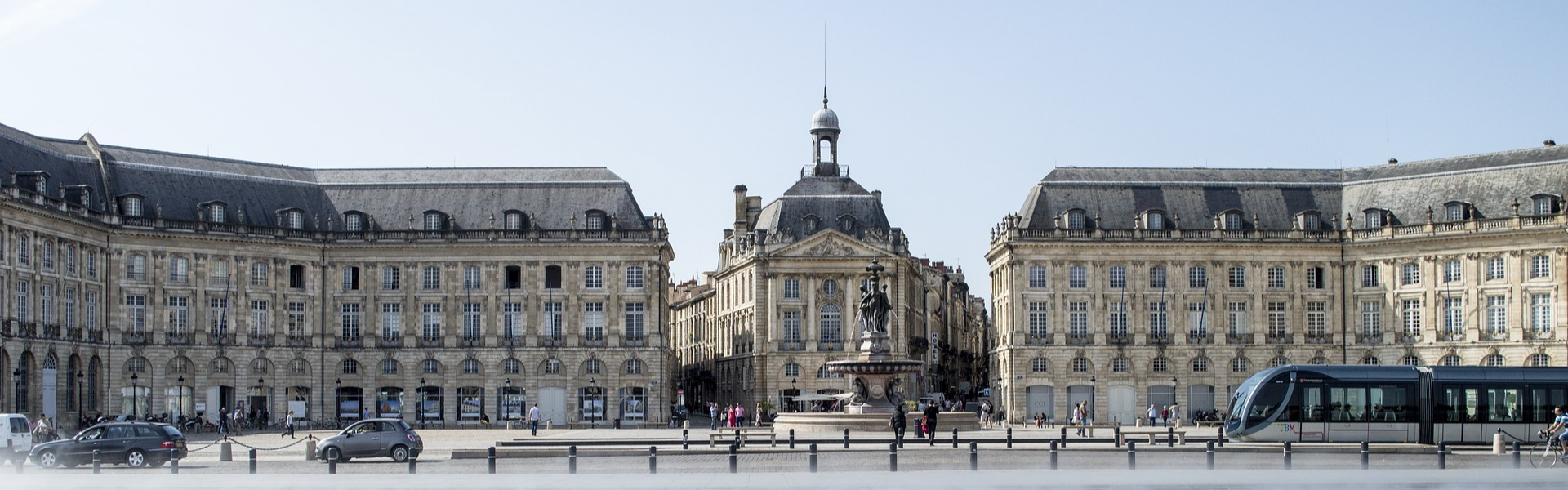
Bordeaux's historic core, the Port de la Lune, is a UNESCO World Heritage Site. The city is best explored on foot along the Garonne riverfront, between Place de la Bourse and its miroir d'eau, the reflecting pool that has become the city's signature photo. You get the feel of a major French city without Paris distances, and hotels run about 21 percent cheaper than the capital for a comparable category.
It is also the gateway to the world's most famous wine country. To the east lies Saint-Émilion, a medieval village whose wine jurisdiction is itself UNESCO-listed. To the north, the Médoc and its château route. Half-day and full-day excursions depart straight from the city, and the Cité du Vin museum gives you the backstory before you head into the vines. One practical note: château visits should be booked ahead, especially around harvest time.
The third argument is the ocean. Arcachon and its bay, famous for oysters, sit about 50 minutes away by regional train, and the Dune du Pilat, Europe's tallest sand dune, is about an hour's drive. Few places in France combine city heritage, vineyards and coastline this easily in a single trip, with the bonus of a nonstop flight from Montreal.
When to go
The two best windows are May-June and September-October: pleasant weather, thinner crowds and gentler hotel prices than midsummer. September-October adds the harvest, when the vineyards are in full swing and château visits are at their most interesting, provided you book early. In August, the Atlantic coast is packed, which you will feel around Arcachon. In winter the city remains a good visit, and the nonstop flight now runs year-round.
| Period | Weather and atmosphere | Verdict |
| May-June | Mild, terrace season, ahead of the big crowds | Excellent |
| July-August | Hot; the coast and Arcachon Bay are very busy | Fine for the city, crowded beaches |
| September-October | Grape harvest, pleasant weather, lower prices | The best window |
| November-April | Low season, quieter city; two nonstop flights a week from Montreal | Good pick for a city break |
Getting there from Canada
The most direct option is Air Transat's nonstop Montreal-Bordeaux service. Long a seasonal route, it becomes year-round starting in winter 2026-2027, with two nonstop flights a week in winter, on Tuesdays and Saturdays, and several weekly rotations in summer. That is a real advantage: you land in the heart of wine country without a European connection. Seasonal frequencies change from year to year, so have the operating days confirmed when you book. From Toronto, the usual routing is a connection through Paris or through Montreal.
The other proven itinerary runs through Paris, served nonstop year-round from Montreal by Air Canada, Air France and Air Transat (about 6 h 45 to 7 h in the air). From Montparnasse station, the TGV reaches Bordeaux in as little as 2 h 08, with roughly 28 departures a day. Seat reservations are mandatory on the TGV and fares climb as the date approaches: book early, and look at the low-cost OUIGO trains to pay less. This combination lets you pair a few days in Paris with a week in the southwest on a single transatlantic ticket.
Bordeaux and around: the must-sees
The historic centre and the miroir d'eau
The Port de la Lune, the crescent-shaped historic centre along the Garonne, is UNESCO-listed. The highlight is Place de la Bourse and its miroir d'eau, a vast reflecting pool set on the quays facing the facades. Go twice: by day for photos, in the evening for the atmosphere along the riverfront.
The Cité du Vin
This immersive museum covers wine civilizations from antiquity to today and ends with a panoramic tasting at the belvedere, overlooking the city. It is the best introduction before you head out to the vineyards. In summer, booking online ahead of time is recommended.
Saint-Émilion
A medieval village surrounded by vines, Saint-Émilion is the most popular day trip from Bordeaux, and its wine jurisdiction is a UNESCO World Heritage Site. Half-day and full-day excursions typically combine the village with one or two estates and tastings. Reserve your spots ahead in high season and during the harvest.
The Médoc and its châteaux
North of Bordeaux, the château route runs through the Médoc and its great names. Estates are visited by appointment: book your time slots before you leave rather than improvising on the spot, especially in September-October when teams are busy with the harvest. A guided full-day excursion also solves the driving question, so everyone can taste.
Arcachon and the Dune du Pilat
Arcachon Bay is a direct regional train ride from Bordeaux, about 50 minutes. Expect Belle Époque villas, bay oysters eaten facing the water and views across to the Cap Ferret peninsula. Nearby, the Dune du Pilat, at roughly 110 m, is the tallest sand dune in Europe; a seasonal staircase leads to the top, about an hour's drive southwest of Bordeaux.
The budget, in Canadian dollars
Bordeaux costs noticeably less than Paris for accommodation in the same category. The classic French money-saver applies here too: the fixed-price lunch menu, a starter-main or main-dessert formula, is the affordable way to eat well. Vineyard excursions and château visits come on top, depending on your plans.
| Item | Indicative range in $ CAD |
| Round-trip flight, Montreal-Bordeaux | From about $700 to $750 off-peak; often over $1,000 in the summer high season |
| Three-star hotel (per night) | About $160 to $195 (100 to 120 euros) |
| Fixed-price lunch menu | About $25 to $40 (15 to 25 euros) per person |
| TGV Paris-Bordeaux | Highly variable; booking early costs far less (low-cost OUIGO trains) |
These amounts are indicative only, converted at roughly 1 euro = $1.62 CAD as observed in July 2026; they vary with the season and how far ahead you book.
Entry requirements and health for Canadian citizens
- Passport valid at least 3 months beyond your planned departure date from the Schengen area.
- Visa-free stays of up to 90 days in any 180-day period in the Schengen area (cumulative across all Schengen countries).
- A 1950 Canada-France bilateral agreement allows an extra 90 days in metropolitan France beyond the 90 Schengen days; declare it when crossing the French border so your file is adjusted.
- EES (Entry/Exit System) is in effect: your photo and fingerprints are collected at the Schengen border, with no advance steps required.
- ETIAS: still to come as of July 2026 (launch expected late 2026). Beware of fraudulent websites; no application is possible yet.
- Travel insurance is strongly recommended (out-of-country medical care and cancellation).
- The Government of Canada advises a high degree of caution in France due to the threat of terrorism; check travel.gc.ca for current advice before departure.
Three pieces of advice from the desk before you pack. One: if the harvest appeals to you, book accommodation and château visits several months ahead, since September-October is peak wine-tourism season. Two: buy your TGV tickets at the same time as your flight, because the best fares go fast. Three: give Arcachon Bay a full day; the combination of oysters, the resort town and the Dune du Pilat deserves better than a rushed round trip.
Ready to plan your Bordeaux trip? Our advisors across Canada will build your custom itinerary at no cost and with no obligation. 450-628-6241 | 1-866-628-6241 | info@voyagesaquaterra.com
Voyages AquaTerra holds a Quebec travel agency permit.
Frequently asked questions about Bordeaux
Do Canadians need a visa to visit Bordeaux?
Canadian citizens travel visa-free to France for stays of 90 days or less in any 180-day period in the Schengen area. Your passport must be valid at least 3 months beyond your planned exit from Schengen. The EES system records your photo and fingerprints on arrival, with no advance steps; ETIAS, expected late 2026, was still to come as of July 2026.
How long is the flight from Montreal to Bordeaux?
Air Transat's nonstop is in the same range as Montreal-Paris, roughly 6 h 45 to 7 h eastbound. The route, historically seasonal, becomes year-round starting in winter 2026-2027, with two weekly flights in winter and more in summer. Via Paris, add your connection plus 2 h 08 on the TGV.
When is the best time to visit Bordeaux?
May-June and September-October offer the best balance of weather, crowds and prices. September-October adds the harvest atmosphere in the vineyards. July-August is still pleasant in the city, but the coast and Arcachon Bay get very busy.
Is Bordeaux safe?
The Government of Canada advises a high degree of caution in France due to the threat of terrorism, an advisory that applies countrywide. Day to day, the usual big-city precautions apply, particularly against pickpocketing in tourist areas. Check travel.gc.ca for up-to-date advice before you go.
What budget should I plan for Bordeaux?
As an indicative guide, count about $160 to $195 CAD a night for a three-star hotel and $25 to $40 per person for a fixed-price lunch. Round-trip flights from Montreal show up from about $700 to $750 off-peak, often over $1,000 in summer. Vineyard excursions come on top, depending on your program.
What is the time difference with Bordeaux?
Bordeaux is 6 hours ahead of Montreal and Toronto, in summer and winter alike, since clock changes are nearly synchronized. When it is noon in Montreal, it is 6 p.m. in Bordeaux. Allow a day or two to adjust after arrival.
Can you visit the vineyards without a car?
Yes, and it is actually the simplest formula. Guided half-day and full-day excursions leave from Bordeaux for Saint-Émilion and the Médoc with transport and tastings included, which spares you a designated driver. The Cité du Vin, in the city itself, requires no vehicle at all.
When is the grape harvest in Bordeaux?
The harvest takes place in September-October, the liveliest period in the Bordeaux wine country. It is a superb time to visit, provided you reserve château visits and accommodation well in advance, because the estates are in full production and spots go quickly.
Should I fly into Bordeaux or Paris?
If your dates line up with Air Transat's nonstop from Montreal, arriving via Bordeaux avoids any connection. Paris remains the most flexible gateway, served nonstop year-round from Montreal, with the TGV reaching Bordeaux in 2 h 08; from Toronto, Paris is generally the natural routing. The hybrid formula, a few days in Paris then the train, works very well.
How many days should I spend in Bordeaux?
Count two days for the city itself, between the historic centre, the miroir d'eau and the Cité du Vin. Add one day for Saint-Émilion or the Médoc and another for Arcachon and the Dune du Pilat. Four to five days makes a complete stay; a week leaves room for more excursions in the region.