Departure

Return


Loading

Hong Kong Travel from Canada: The Complete Guide

Canadian citizens can enter Hong Kong visa-free for tourist stays of up to 90 days, a far more generous rule than the one that applies in mainland China. There is no non-stop flight from Montreal in 2026 (plan on roughly 19 to 23 hours with one connection), while Toronto has a direct Cathay Pacific service of about 15 hours 50 minutes. The best time to visit is October to December, when the weather is dry and sunny with temperatures of 18 to 27 degrees Celsius. Hong Kong is 12 hours ahead of Montreal and Toronto in summer and 13 hours in winter. As a guideline, budget travellers spend about $100 to $140 CAD per person per day, and mid-range travellers about $250 to $360 CAD. Hong Kong is a Special Administrative Region of China with its own immigration regime, and its internet is not censored.

The essentials at a glance

Item Key facts
Flights from Montreal/Toronto No non-stop from Montreal: about 19 to 23 h with 1 stop. From Toronto: direct Cathay Pacific flights, about 15 h 50
Visa/entry requirements Visa-free up to 90 days for Canadians (tourism and business); passport valid at least 1 month beyond your planned departure from Hong Kong
Time difference +12 h in summer, +13 h in winter vs Montreal and Toronto (UTC+8, no daylight saving time)
Currency Hong Kong dollar (HKD), pegged to the US dollar; $1 CAD ≈ 5.64 HKD (July 2026)
Language Cantonese in daily life; English is an official language and widely used
Best time to visit October to December: dry, sunny, 18 to 27 °C
Driving side Left, a British legacy
Electricity 220 V, British-style three-pin plugs; adapter required

Why Hong Kong

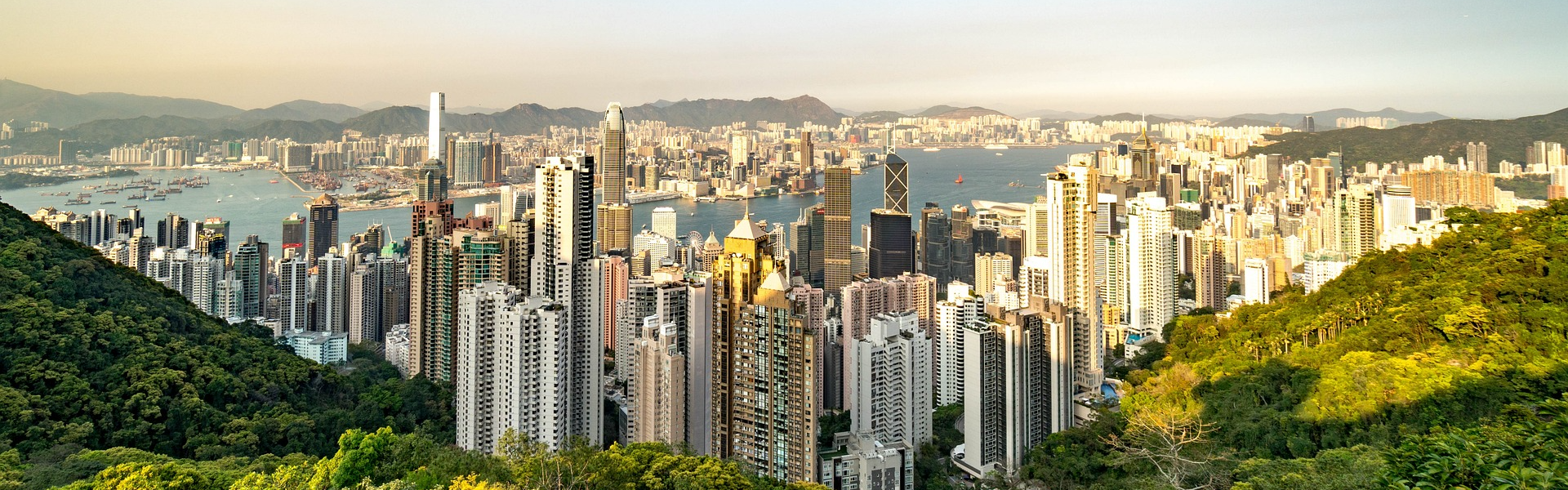
Few cities pack this much contrast into such a compact territory. On one side, the Central skyline and Victoria Harbour, which the Star Ferry crosses in minutes for a few Hong Kong dollars, making it one of the world's most iconic and least expensive rides. On the other, hills, hiking trails and beaches you can reach by public transit, less than an hour from the skyscrapers.

Hong Kong is also the easiest gateway to the region for Canadian travellers: visa-free entry for up to 90 days, English widely spoken, credit cards broadly accepted and an uncensored internet. Google, WhatsApp and Instagram all work without a VPN, unlike in mainland China. It is a logical starting point before continuing on to China, as long as you plan for the mainland's separate entry requirements.

Finally, the city is easy to explore without a car. The MTR metro, buses, trams and ferries cover most of the territory, and the rechargeable Octopus card works on transit, in convenience stores and in many shops.

When to go

Period Climate Notes
October to December Dry and sunny, 18 to 27 °C The best time of the year
April to October Typhoon season, peaking in August and September Heavy rain possible, with flood and landslide risks
June to September Very hot and humid, 31 to 33 °C, feeling hotter Frequent thunderstorms; plan visits early in the day

Autumn is the consensus pick: it is the ideal season for hiking, outdoor dining and clear views from Victoria Peak. If you travel between April and October, follow local weather bulletins, as typhoons can disrupt flights and activities, especially in August and September. Travel insurance with cancellation coverage is particularly worthwhile then.

Getting there from Canada

From Toronto (YYZ), Cathay Pacific operates the only non-stop service to Hong Kong, with 2 to 3 daily flights on the Airbus A350-1000 and a flight time of about 15 hours 50 minutes outbound. Air Canada no longer flies Toronto-Hong Kong non-stop; it serves Hong Kong through Vancouver, with a daily Vancouver-Hong Kong flight on the Boeing 787-9 (about 13 h 55 on the transpacific segment). On the summer 2026 schedule, that flight leaves Vancouver at 12:15 a.m. and lands in Hong Kong at 5:10 a.m. local time two calendar days later.

From Montreal (YUL), there is no non-stop option: typical one-stop routings connect through Vancouver, Toronto or Asian and European hubs such as Tokyo, Seoul, Doha, Istanbul or Paris. Plan on roughly 19 to 23 hours door to door from Montreal with one connection.

Hong Kong's key districts and highlights

Hong Kong Island: Central and Victoria Peak

Central is the city's financial heart: office towers, shopping arcades and, just uphill, the SoHo district reached via the Mid-Levels escalators. Above it all, Victoria Peak delivers the classic view over the skyline and the harbour. Ride up on the Peak Tram, a funicular that opened in 1888 and was renovated in 2022. Best move: go up late in the day to catch the sunset, then the city lights.

Kowloon: Tsim Sha Tsui and the markets

Across Victoria Harbour, Tsim Sha Tsui gathers museums and a waterfront promenade facing the island's skyline. For the crossing, take the Star Ferry from Central: a few Hong Kong dollars for one of the most photogenic urban rides anywhere. Further north, Mong Kok lines up its street markets, ideal for people-watching, bargaining and eating on the go. The Octopus card can be topped up at MTR stations and used throughout both districts.

The islands: Lantau and the Big Buddha

Lantau Island is home to the Tian Tan Big Buddha, one of the territory's most visited sites. The Ngong Ping 360 cable car glides over hills and sea to reach it, an outing that easily fills a half day or a full day. It is the rural counterpoint to the city, with villages, trails and a monastery near the Buddha.

Hiking and beaches

Hong Kong's nature comes as a surprise: much of the territory consists of hills, parkland and coastline, and many hiking trails are reachable directly by public transit. Beaches also lie within easy reach of the central districts. The dry season, October to December, is generally the most pleasant for walking, with temperatures of 18 to 27 °C. In summer, the humid heat and frequent thunderstorms mean starting early, carrying water and checking forecasts, especially since typhoon season runs from about April to October.

Food: dim sum and dai pai dong

Cantonese cuisine starts with dim sum: steamed bites, dumplings and small sharing plates served in tea houses and neighbourhood restaurants. For a more raw experience, the dai pai dong, Hong Kong's traditional open-air street eateries, serve simple, fast local food at low prices. Local canteens make it easy to eat well even on a tight budget. Credit cards are widely accepted in established restaurants, and the Octopus card settles the bill in many shops.

Budget, in Canadian dollars

Range Per person, per day What it covers
Budget About $100 to $140 CAD Hostel or guesthouse, local canteens, MTR rides
Mid-range About $250 to $360 CAD 3 to 4-star hotel, varied restaurants, attractions
Comfort $550 to $870 CAD and up High-end hotel, renowned dining

These figures are estimates, provided as a guideline and converted at July 2026 rates ($1 CAD ≈ 5.64 HKD). Hong Kong is noticeably more expensive than Shanghai or Beijing, above all for accommodation, which is the line item to watch. Public transit, on the other hand, stays affordable, and the Star Ferry costs only a few Hong Kong dollars. International airfare is the other major expense; prices vary with the season and how far ahead you book.

Entry requirements and health for Canadian citizens

  • Passport: valid for at least 1 month beyond your planned departure date from Hong Kong.
  • Visa: no visa required for tourist or business stays of up to 90 days. A visa is still needed to study or work.
  • Key distinction from mainland China: Hong Kong, a Special Administrative Region, runs its own immigration regime. Crossing from Hong Kong into Shenzhen or anywhere else on the mainland counts as entering China: the 30-day visa exemption for Canadians (in effect until December 31, 2026) or a visa then applies. See our China page for details.
  • Vaccines: routine vaccines up to date; hepatitis A is recommended for all travellers; COVID-19 and flu shots advised; take mosquito precautions (dengue, chikungunya); rabies vaccination depends on your activities. Visit a travel health clinic about 6 weeks before departure.
  • Travel insurance: comprehensive medical and cancellation coverage is strongly recommended.
  • Official advisories: the Government of Canada advises travellers to "exercise a high degree of caution" in Hong Kong, notably because of the risk of arbitrary enforcement of local laws and the national security law. Check travel.gc.ca before booking and before you leave.

One last tip: pick up an Octopus card on arrival (tourist and mobile versions are available), keep an eye on the weather during typhoon season and book accommodation early, since it is the biggest expense of this trip.

Ready to see Hong Kong for yourself? An AquaTerra travel advisor can build your itinerary, compare one-stop flight options from Montreal or direct flights from Toronto, and pair Hong Kong with mainland China according to current entry rules. 450-628-6241 | 1-866-628-6241 | info@voyagesaquaterra.com

Voyages AquaTerra holds a Québec travel agency permit.

Frequently Asked Questions

No. Canadian citizens can stay in Hong Kong visa-free for up to 90 days for tourism or business. Your passport must be valid for at least 1 month beyond your planned departure date. Note that this differs from mainland China, where the Canadian exemption is limited to 30 days and runs until December 31, 2026.
From Toronto, Cathay Pacific's direct flights take about 15 hours 50 minutes outbound, with 2 to 3 departures daily. From Montreal there is no non-stop service in 2026: expect roughly 19 to 23 hours with one connection, most often through Vancouver or Toronto.
October to December: the weather is dry and sunny, with temperatures of 18 to 27 degrees Celsius. Typhoon season runs from about April to October, peaking in August and September, and summer is very hot and humid (31 to 33 degrees, feeling hotter).
The Government of Canada advises travellers to "exercise a high degree of caution" in Hong Kong, due to the risk of arbitrary enforcement of local laws, including the broadly defined national security law. Check the official advisory on travel.gc.ca before booking and during your trip.
As a guideline: about $100 to $140 CAD per person per day on a tight budget, $250 to $360 CAD mid-range, and $550 to $870 CAD and up for comfort. Hong Kong is noticeably more expensive than Shanghai or Beijing, especially for accommodation. Airfare comes on top of these amounts.
Hong Kong is on UTC+8 year-round, with no daylight saving time. It is 12 hours ahead of Montreal and Toronto in summer and 13 hours ahead in winter. When it is 8 a.m. in Toronto in July, it is 8 p.m. in Hong Kong.
The Octopus card is a rechargeable card accepted on the MTR metro, buses, ferries, in convenience stores and in many shops. Tourist and mobile versions are available. It is the simplest way to pay for transit and small everyday purchases in Hong Kong.
Yes, it counts as entering China: Hong Kong runs its own immigration regime, separate from the mainland. Canadians benefit from a 30-day visa exemption for mainland China, in effect until December 31, 2026; beyond 30 days, or outside the exemption, a visa is required.
Yes. Unlike mainland China, Hong Kong's internet is not censored: Google, WhatsApp and Instagram all work without a VPN. Credit cards are also widely accepted in shops and restaurants.
The Hong Kong dollar (HKD), which is pegged to the US dollar. In July 2026, $1 CAD was worth about 5.64 HKD, as a guideline. Credit cards are widely accepted, and the Octopus card doubles as a payment method in many shops.
  • #Travel
  • #tourism
  • #attractions
  • #cuisine
  • #culture
  • #neighborhoods
  • #shopping
  • #economy
  • #business
  • #transportation
  • #Hong Kong Island
  • #Kowloon
  • #Victoria Harbour
  • #skyscrapers
  • #markets
  • #temples
  • #festivals
  • #beaches
  • #hiking
  • #skyline
  • #night
  • #nightlife
  • #tradition
  • #history
  • #modernity
  • #tram
  • #ferry
  • #airport
  • #panoramic view
  • #Asia World-Expo
  • #Disneyland.