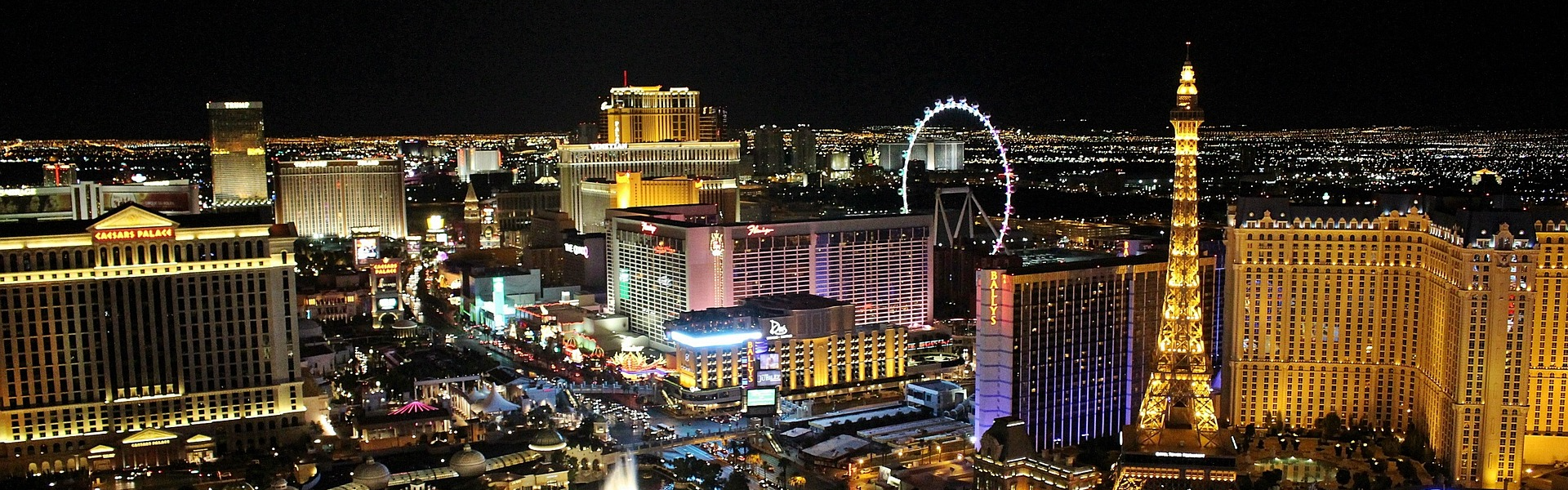
Las Vegas Travel from Canada: The Complete Guide
Canadian citizens need no visa and no ESTA to fly to Las Vegas: a passport valid for the length of your stay is enough, and U.S. preclearance is completed before boarding at Montreal-Trudeau. Air Canada flies non-stop from Montreal (YUL) to Las Vegas (LAS) daily, year-round, about 5 hours 30 minutes westbound; travellers from Toronto have plenty of connecting and direct options to compare with an advisor. Las Vegas sits 3 hours behind Montreal and Toronto. The best windows are spring (March to May) and fall (late September to November); summer regularly tops 40°C. As a guideline, budget $2,200 to $3,800 CAD per person for a week including flights, hotel, meals, one or two shows and a day trip, resort fees extra. Our advisors build Las Vegas itineraries for Canadian travellers every week — here is what you need to know.
The essentials at a glance
| Key fact | Detail |
|---|
| Flights from Canada | Daily year-round non-stop YUL-LAS on Air Canada, about 5 h 30; connections via Toronto, Chicago or Denver |
| Visa for Canadians | None, and no ESTA: valid passport (stays up to 6 months) |
| Time difference | 3 hours behind Montreal and Toronto (Pacific Time) |
| Currency | US dollar; approximately $1.41 CAD per $1 USD, as a guideline |
| Language | English |
| Best time | March to May and late September to November |
| Driving | Right-hand side, same as Canada |
| Power | 120 V, type A/B plugs, identical to Canada |
Why Las Vegas
Along roughly 6.8 km of boulevard, the Strip packs a concentration of casino resorts, restaurants and show venues no other North American city comes close to matching. Since 2023 the city has added the Sphere, an immersive venue of about 18,000 seats wrapped in a giant LED screen inside and out. Then there is the asset many visitors only discover once they arrive: the desert. Red Rock Canyon is 30 minutes away, Hoover Dam 45 minutes, the Valley of Fire 1 hour, and the Grand Canyon's West Rim about 2 hours by road. Few destinations let you pair a headline production at night with red sandstone landscapes the next morning. For a first trip to the United States, it is also one of the simplest entry points: a non-stop flight, zero visa paperwork, and customs cleared before you even leave Canada.
When to go
| Season | Climate and what to know | Verdict |
|---|
| Spring (March to May) | 20 to 30°C, dry weather, ideal for combining the city with day trips | Excellent window |
| Summer (June to September) | Extreme desert heat, regularly 40°C and above in July-August; outdoor excursions unadvisable in peak heat | Hotel rates often lower, but skip the midday outdoors |
| Fall (late September to November) | 20 to 30°C, comfortable conditions return for the parks | Excellent window |
| Winter (December to February) | Mild and sunny by day (10 to 15°C), cool evenings | Very popular with Canadian travellers |
One trap to know about: weekends with major events (big conventions, the F1 Grand Prix, boxing or MMA fights) send hotel prices soaring. Check the events calendar before locking in your dates, or aim for weekdays.
Getting there from Canada
From Montreal, Air Canada operates a daily year-round non-stop YUL-LAS flight on an A319 with an evening departure (as of July 2026); count on about 5 h 25 to 5 h 45 in the air. Air Transat has served this route in the past, and its winter 2026-2027 schedule remains to be confirmed with the carrier. From Toronto and other Canadian cities, itineraries to Las Vegas are plentiful; your advisor can compare current schedules and fares. Connecting options through Toronto, Chicago or Denver are often cheaper than non-stop, at the cost of a longer travel day. The 3-hour time difference works in your favour on the way out: an evening departure still lands at a reasonable local hour, so you can sleep and hit the Strip the next morning.
The neighbourhoods and must-sees
The Strip
The Strip, officially Las Vegas Boulevard, lines up the giant casino resorts that built the city's reputation over roughly 6.8 km: the Bellagio and its fountains, the Venetian and its indoor canals, Caesars Palace. First piece of field advice: distances are deceiving. Two hotels that look side by side can be a 25-minute walk apart, often in full sun. Plan on the monorail, the "Deuce" bus that runs the length of the boulevard, or taxis and ride-shares for longer hops.
Downtown and Fremont Street
About 8 km north of the Strip, Downtown is historic Vegas. The Fremont Street Experience, a light-show canopy covering the pedestrian street, sets the tone: retro casinos, vintage signs and a more relaxed feel than the boulevard. Prices run lower here too, for rooms, gaming tables and restaurants alike. An evening on Fremont Street rounds out a Strip-based stay very well.
The Sphere and the shows
Opened in 2023, the Sphere is an immersive venue of about 18,000 seats whose giant LED screen covers the interior and lights up the exterior. It hosts residencies by major artists plus the Sphere Experience, immersive films shown during the day. Tickets sell fast and often start at $100 USD and up: book early. For traditional shows, Cirque du Soleil and the big productions run roughly $100 to $250 CAD per ticket depending on the category, as a guideline; star residencies usually cost more. Booking before departure locks in the right dates and the right seats.
Day trips: Grand Canyon, Valley of Fire, Red Rock Canyon
Las Vegas is the best urban base for exploring the Southwest desert. The Grand Canyon's West Rim, home to the glass Skywalk, is about 2 hours by road; the South Rim, the most dramatic, takes about 4 h 30. Full-day coach tours run roughly $150 to $350 CAD as a guideline; helicopter tours start around $600 CAD and up. Closer in, Hoover Dam is 45 minutes away, the Valley of Fire and its red sandstone formations 1 hour, and Red Rock Canyon barely 30 minutes. From October to May these outings are at their best; in summer, leave early and avoid the hottest hours.
Shopping smart for your hotel (resort fees)
Nearly every hotel on the Strip charges resort fees, mandatory nightly charges added on top of the room rate. In 2026 they generally run $20 to $55 USD per night plus tax; Aria, Bellagio, Caesars Palace and Wynn sit around $55 USD. New U.S. rules require them to appear in the advertised total price, but you still need to budget for them, along with parking, which is often charged separately. Always compare hotels on the total nightly price, fees included, not on the headline rate. This is exactly the kind of detail your advisor checks before booking.
Budget, in Canadian dollars
| Item | Range, as a guideline |
|---|
| Round-trip non-stop flight YUL-LAS | $450 to $900 CAD depending on season and how far ahead you book; sometimes less with a connection |
| Strip accommodation (per night) | $100 to $250 CAD midweek in a large mid-range casino resort, $350 CAD and up for luxury, resort fees and taxes extra |
| Meals (per day, per person) | $70 to $120 CAD (buffets roughly $40 to $90 CAD; celebrity-chef tables much more) |
| Shows | $100 to $250 CAD per ticket for Cirque du Soleil and major productions; residencies and the Sphere often more |
| Grand Canyon day trip | $150 to $350 CAD by coach, $600 CAD and up by helicopter |
| Total budget, 1 week per person | $2,200 to $3,800 CAD (flights, hotel, meals, 1-2 shows, 1 day trip) |
Weekends and major events can multiply those hotel ranges. All amounts are guidelines only, to be confirmed at booking time.
Entry requirements and health for Canadian citizens
- Passport: valid for the length of your stay (a valid NEXUS card is also accepted). U.S. preclearance is completed at Montreal-Trudeau before boarding.
- Visa: none required for Canadian citizens arriving by air, and no ESTA. Maximum visa-free stay: 6 months.
- Stays of 30 days or more: under U.S. rules in effect in 2026, Canadians staying in the United States for more than 30 days must be registered with the U.S. government. The I-94 admission record issued on entry can serve as proof and can be checked on the U.S. Customs and Border Protection website. Non-compliance can lead to penalties and fines. Irrelevant for a typical 4-to-7-day trip, but essential for snowbirds; confirm before departure.
- Travel insurance: medical coverage is essential. U.S. medical bills can reach tens of thousands of dollars.
- Health: in summer, desert heat calls for constant hydration, sun protection and caution during the hottest hours.
- Official source: check the United States page on travel.gc.ca before departure, as rules can change.
Our advice, after sending hundreds of clients
Always compare hotels on the total price, resort fees and taxes included: two rooms advertised at the same rate can differ by $300 CAD or more over a week. Aim for weekdays rather than weekends, and check the convention and F1 calendar before setting your dates. Book the Sphere and your shows before departure, because the best dates go fast. In summer, schedule excursions for early morning and save the hottest hours for air-conditioned interiors. Useful reminder: you must be 21 to gamble in the casinos or drink alcohol. Finally, travel with full travel insurance, no exceptions; for the United States, it is rule number one.
Ready to plan your Las Vegas trip? Talk to an advisor who knows the ground — free of charge and with no obligation. 450-628-6241 | 1-866-628-6241 | info@voyagesaquaterra.com — More than 950 advisors across Quebec.
Voyages AquaTerra holds a Québec travel agency permit.
Frequently Asked Questions About Las Vegas
Do Canadians need a visa to visit Las Vegas?
Canadian citizens arriving by air need no visa and no ESTA. A passport valid for the length of the stay (or a valid NEXUS card) is enough, and visa-free stays can last up to 6 months. U.S. preclearance is completed at Montreal-Trudeau before boarding.
How long is the flight to Las Vegas from Canada?
The non-stop Montreal-Las Vegas flight takes about 5 h 25 to 5 h 45 westbound, and Air Canada operates it daily, year-round. Connecting itineraries through Toronto, Chicago or Denver lengthen the travel day but sometimes cost less. Toronto travellers have many options; an advisor can compare current schedules.
What is the best time to visit Las Vegas?
Spring (March to May) and fall (late September to November) bring 20 to 30°C, ideal for combining the city with park excursions. Winter is mild and sunny by day. Summer means extreme heat, regularly 40°C and above in July-August, but hotel rates are often lower.
Is Las Vegas safe for travellers?
The tourist zones of the Strip and Fremont Street are busy and heavily monitored. Apply standard big-city precautions: watch your belongings, limit cash, and stay in well-travelled areas at night. Check the latest official advice on travel.gc.ca before departure.
How much does a week in Las Vegas cost?
As a guideline, budget $2,200 to $3,800 CAD per person for a week including the non-stop flight, a Strip hotel, meals, one or two shows and a day trip. Add resort fees, generally $20 to $55 USD per night plus tax. Major-event weekends push hotel prices up sharply.
What is the time difference between Canada and Las Vegas?
Las Vegas runs on Pacific Time, 3 hours behind Montreal and Toronto. When it is noon in Montreal, it is 9 a.m. in Las Vegas. The gap is mild and works in your favour on arrival.
What are resort fees in Las Vegas?
Resort fees are mandatory nightly charges added on top of the room rate by nearly every Strip hotel, generally $20 to $55 USD per night plus tax in 2026. U.S. rules now require them to appear in the advertised total price. Always compare hotels on the total nightly price, fees included.
Can you visit the Grand Canyon on a day trip from Las Vegas?
Yes. The West Rim, home to the Skywalk glass bridge, is about 2 hours by road, and the South Rim about 4 h 30. Full-day coach tours run roughly $150 to $350 CAD as a guideline, and helicopter tours start around $600 CAD.
What is the legal gambling age in Las Vegas?
You must be 21 to gamble in the casinos and to drink alcohol. The rule also applies on the casino floors you cross inside the hotels. Photo ID can be requested at any time.
Is Las Vegas too hot in summer?
From June to September, desert heat is extreme, regularly reaching 40°C and above in July-August. Outdoor excursions are unadvisable during peak heat; head out early in the morning and keep afternoons for air-conditioned interiors. On the upside, hotel rates are often lower in summer.