Departure

Return


Loading

Venice Travel from Canada: The Complete Guide

Canadian citizens do not need a visa to visit Venice: tourist stays of up to 90 days in any 180-day period are allowed in the Schengen area. In summer, direct flights link Montreal (YUL) to Venice Marco Polo (VCE) in about 8 hours, and Toronto (YYZ) in about 8 hours 20 minutes, with Air Canada and Air Transat. The best times to go are April to June and September to October, when crowds become more manageable. As a guideline, plan on 260 to 400 CAD per person per day at a mid-range level, excluding flights. In 2026, an access fee of 5 to 10 EUR applied to day visitors on 60 designated days between April 3 and July 26; travellers who stay overnight in Venice are exempt. Here is what you need to plan your trip.

The essentials at a glance

Item Key facts
Flights from Montreal/Toronto Seasonal direct flights to Venice Marco Polo (VCE): about 8 h from YUL, about 8 h 20 from YYZ; one European stop the rest of the year
Visa / entry requirements No visa (maximum 90 days in any 180, Schengen area); passport valid at least 3 months beyond your planned departure from Schengen
Time difference 6 hours ahead of Montreal and Toronto in summer (noon in Montreal = 6 p.m. in Venice)
Currency Euro (1 EUR ≈ 1.62 CAD as of July 2026)
Language Italian
Best time to visit April to June, September and October
Driving (side) Right side in Italy; Venice itself is entirely pedestrian, with no cars
Electricity 230 V, type C, F and L plugs (adapter required)

Why Venice

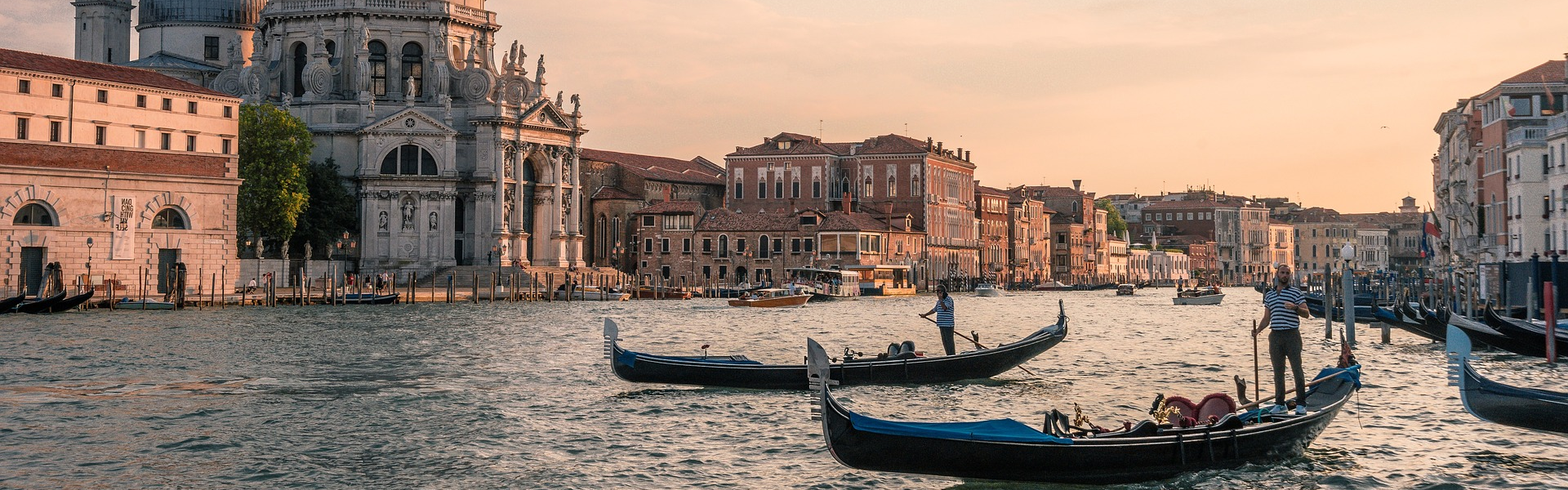
Venice is a car-free city built on a lagoon: you get around on foot, by vaporetto or by boat, and that changes everything. Distances are short, your landmarks are canals and bell towers, and the city rewards wandering as much as sightseeing. St. Mark's Square, the Doge's Palace and the Grand Canal concentrate the legacy of the old Venetian Republic within a few hundred metres.

It is also a destination that rewards those who stay the night. The city manages crowds with an access fee aimed at day visitors: sleeping in Venice exempts you from it and gives you the city at dawn and in the evening, after the tour groups have left. Districts like Cannaregio, Dorsoduro and Castello then show a residential side that day trippers never see.

Venice also pairs naturally with the rest of Italy: many travellers continue by train to Florence or Rome, then fly home from Rome, which has direct flights to both Montreal and Toronto.

When to go

Period Climate and crowds Notes
April to June Generally mild, long days Ideal window; busy weekends from Easter onward
July and August Hot, peak season, very dense Book accommodation and timed tickets well in advance
September and October Generally mild, crowds gradually easing Ideal window; first acqua alta episodes possible in October
November to January Cool and damp, low season Acqua alta more frequent; the city is much quieter
February Venice Carnival Very popular; book accommodation very early

High season runs from Easter to October, with peaks on weekends and on cruise ship days. In 2026, the access fee (Contributo di accesso) applied on 60 designated days between April 3 and July 26, from 8:30 a.m. to 4 p.m.: 5 EUR per person aged 14 and over if booked at least 4 days ahead, 10 EUR otherwise. Visitors staying in accommodation within the municipality of Venice are exempt (proof or QR code required): the fee targets day trippers. No paying days were scheduled after July 26, 2026, and the 2027 calendar has not been confirmed yet: check the official portal cda.ve.it before you travel.

Getting there from Canada

In summer, Air Canada operates a direct Montreal-Venice flight (AC818, on an Airbus A330) three times a week, on Tuesdays, Thursdays and Saturdays, and Air Transat also flies the route in season; flight time is about 8 hours. From Toronto, Air Canada and Air Transat offer direct flights, about 7 per week in summer, in roughly 8 hours 20 minutes. The rest of the year, expect one European connection, or fly direct to Rome, which is served year-round from Canada.

From Venice Marco Polo airport, you have three options: the Alilaguna water shuttle, which reaches the St. Mark's area in about 1 hour 15 minutes; the ATVO or ACTV bus to Piazzale Roma, the city's road entrance, in about 20 minutes; or a private water taxi, the most expensive but most direct option.

Neighbourhoods and highlights

St. Mark's Square and the Doge's Palace

Venice's monumental heart fits on a single square: St. Mark's Basilica, the bell tower and the Doge's Palace, seat of power of the old Republic. For both the basilica and the palace, book timed skip-the-line tickets: in high season, the lines without reservations are long. Visit at opening time or late in the afternoon, then come back to the square in the evening, when it regains its calm.

The Grand Canal by vaporetto

The vaporetto, the ACTV water bus, is both Venice's public transit and the simplest cruise there is: riding up the Grand Canal takes you past the palaces and the Rialto Bridge for the price of a ticket. A single ticket costs 9.50 EUR and is valid for 75 minutes; passes cost 25 EUR (1 day), 35 EUR (2 days) and 45 EUR (3 days) and pay off after just three rides. If you plan to visit the islands, the pass is the obvious choice.

Cannaregio, Dorsoduro and Castello: the quieter sestieri

Venice is divided into six historic districts, the sestieri, and three of them let you breathe away from the crowds. Cannaregio, to the north, is home to the old Jewish Ghetto and remains far less touristy than the St. Mark's area. Dorsoduro combines several museums with a genuinely local feel, that of a district people still live in. Castello, east of St. Mark's Square, is generally the quietest of the three: residential lanes, laundry hanging between windows, neighbourhood cafés. The rule is simple: the farther you get from St. Mark's and the Rialto, the more Venice becomes a lived-in city again.

Murano and Burano: the lagoon islands

A half day or full day by vaporetto is enough to explore the lagoon islands. Murano is renowned for its glass-blowing workshops, a tradition you can watch in some of the glassworks. Burano, farther out, is known for its brightly coloured houses and its lace-making tradition. With a 1, 2 or 3-day vaporetto pass, the excursion costs nothing beyond your regular rides: leave early to enjoy the islands before the groups arrive at midday.

Beating the crowds: practical tips

Stay overnight: besides exempting you from the access fee on designated days, it gives you Venice before 9 a.m. and after 6 p.m., when most day visitors have gone. See St. Mark's and the Doge's Palace at opening or at the end of the day, always with timed tickets. Choose April to June or September-October over July-August, and weekdays over weekends, which are especially busy from Easter to October. On cruise ship days, avoid the St. Mark's-Rialto axis at midday and head for Cannaregio or Castello: a few bridges away from the crowds, café terraces open up.

Your budget, in Canadian dollars

Category Per day, per person (excluding flights) What it covers
Budget 130 to 190 CAD Simple accommodation (or in Mestre), casual meals, vaporetto
Mid-range 260 to 400 CAD Mid-category hotel, restaurants, paid attractions
Comfort 500 CAD and up High-end hotel in the historic centre, private experiences

These amounts are provided as guidelines only: Venice is among the most expensive cities in Italy, and sleeping in Mestre, on the mainland, lowers the accommodation bill. Add the tourist tax, collected by your accommodation, of roughly 1 to 5 EUR per person per night depending on category and season; it is separate from the access fee. For quick conversions: 1 EUR is worth about 1.62 CAD (July 2026), so 100 EUR is roughly 162 CAD.

Entry requirements and health for Canadian citizens

  • Passport valid at least 3 months beyond your planned departure from the Schengen area; in practice, aim for 6 months of validity.
  • No visa for tourist stays of 90 days or less in any 180-day period in the Schengen area.
  • EES (Entry/Exit System) in effect: on arrival, your facial image and fingerprints are registered. Nothing to do beforehand; allow a few extra minutes at your first border crossing.
  • ETIAS: not yet in effect in summer 2026 (launch expected in the last quarter of 2026). Applications are not open; beware of unofficial websites already "selling" an authorization.
  • Routine vaccines up to date; tick-borne encephalitis is present in some areas of Italy. See a travel health clinic 4 to 6 weeks before departure.
  • Travel insurance covering medical care is strongly recommended.
  • The Government of Canada advises travellers to "exercise a high degree of caution" in Italy due to the threat of terrorism; check travel.gc.ca before you go.
  • A customs declaration is mandatory if you carry 10,000 EUR or more when entering or leaving the European Union.

Ready to see Venice as more than a day trip? An AquaTerra advisor can build your itinerary, book your timed skip-the-line tickets and confirm the entry requirements in effect when you travel. 450-628-6241 | 1-866-628-6241 | info@voyagesaquaterra.com

Voyages AquaTerra holds a Québec travel agency permit.

Frequently Asked Questions

No. Canadians can stay visa-free for up to 90 days in any 180-day period in the Schengen area, which includes Italy. Your passport must be valid for at least 3 months beyond your planned departure from the Schengen area. ETIAS was not yet in effect in summer 2026: its launch is expected in the last quarter of 2026 and applications are not open.
Direct flights take about 8 hours from Montreal and about 8 hours 20 minutes from Toronto. In summer, Air Canada flies Montreal-Venice three times a week (Tuesday, Thursday and Saturday) and Air Transat also serves the route; from Toronto there are about 7 direct flights per week. The rest of the year, expect one European connection.
April to June and September to October, when crowds are more manageable. From Easter to October, high season is very dense, especially on weekends and cruise ship days. Acqua alta occurs mostly from October to January, and the February Carnival is also very popular.
The Government of Canada advises travellers to exercise a high degree of caution in Italy due to the threat of terrorism. Check the official advice on travel.gc.ca before departure and carry travel insurance that covers medical care.
As a guideline, excluding flights: 130 to 190 CAD per person per day on a budget, 260 to 400 CAD mid-range, and 500 CAD and up for comfort. Venice is among the most expensive cities in Italy; staying in Mestre, on the mainland, lowers the bill. Also budget for the tourist tax of roughly 1 to 5 EUR per person per night.
In summer, Venice is 6 hours ahead of Montreal and Toronto: noon in Montreal is 6 p.m. in Venice. Italy is on Central European Time.
In 2026, the access fee applied to day visitors aged 14 and over on 60 designated days between April 3 and July 26, from 8:30 a.m. to 4 p.m.: 5 EUR if booked at least 4 days in advance, 10 EUR otherwise. Travellers staying in accommodation within the municipality of Venice are exempt, with proof or a QR code. The 2027 calendar has not been confirmed yet; the official portal is cda.ve.it.
A single ACTV ticket costs 9.50 EUR and is valid for 75 minutes. Passes cost 25 EUR for 1 day, 35 EUR for 2 days and 45 EUR for 3 days, and pay off after just three rides, especially if you visit the lagoon islands.
Both islands are reached by vaporetto, the ACTV water bus. A 1, 2 or 3-day pass covers the excursion at no extra cost. Leave early in the morning to enjoy Murano's glassworks and Burano's coloured houses before the groups arrive at midday.
Italy uses the euro. As of July 2026, 1 EUR was worth about 1.62 CAD, so 100 EUR is roughly 162 CAD. A customs declaration is mandatory if you carry 10,000 EUR or more when entering or leaving the European Union.
  • #ravel
  • #Tourism
  • #Venice
  • #Italy
  • #Visit
  • #Destinations
  • #History
  • #Culture
  • #Cuisine
  • #Art
  • #Canals
  • #Gondolas
  • #Tourist Sites
  • #Carnival
  • #St. Mark's Basilica
  • #Lagoon Islands
  • #Murano
  • #Burano
  • #Vaporetto Transport
  • #Rialto Bridge
  • #Beaches
  • #Budget
  • #Tips
  • #Itineraries
  • #Weather
  • #Language
  • #Transportation
  • #Accommodation
  • #Activities.