Shanghai Travel from Canada: The Complete Guide
Shanghai became one of Asia's easiest major cities for Canadians to visit in 2026: no visa is required for tourist stays of 30 days or less, under an exemption in effect from February 17 to December 31, 2026. From Toronto, Air Canada restored a nonstop flight to Shanghai Pudong on June 3, 2026, taking roughly 15.5 to 16 hours; from Montreal there is no nonstop, so plan on about 18 to 22 hours with one connection, usually through Toronto or Vancouver. The best times to go are spring (April-May) and fall (September to early November). As a guideline, a mid-range budget runs about $195 to $270 CAD per person per day. On the ground, nearly everything is paid by phone through Alipay or WeChat Pay, both of which now accept Canadian credit cards.
The essentials at a glance
| Item |
What to know |
| Flight from Montreal/Toronto |
No nonstop from Montreal (about 18-22 h with one stop); nonstop from Toronto with Air Canada, about 15.5-16 h |
| Visa/entry rules |
No visa for stays of 30 days or less (exemption from February 17 to December 31, 2026); passport valid 6 months on entry |
| Time difference |
+12 h in summer, +13 h in winter vs. Eastern Time (no daylight saving in China) |
| Currency |
Chinese yuan (CNY); 1 CAD ≈ 4.82 CNY (July 2026) |
| Language |
Mandarin; limited English outside hotels and tourist sites |
| Best time to visit |
April-May and September to early November |
| Driving (side) |
Right |
| Electricity |
220 V; universal adapter recommended |
Why Shanghai
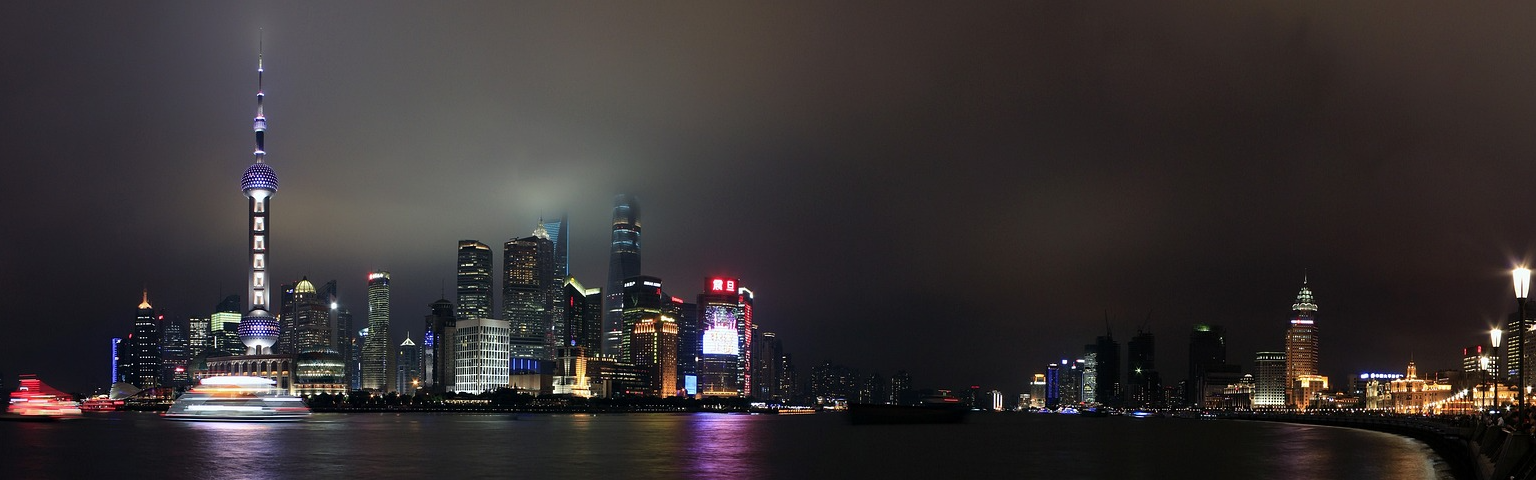
Few cities offer such a readable contrast in a single glance. On the west bank of the Huangpu River, the Bund lines up early-20th-century bank and hotel facades; directly across the water, Pudong raises its glass towers, led by the 632 m Shanghai Tower. The metro crosses the river in minutes, and every crossing feels like changing centuries.
It is also the most convenient gateway to China for Canadians in 2026: a nonstop flight from Toronto, a 30-day visa exemption, one of the world's largest metro networks and a maglev train linking the airport to the city. From Hongqiao station, high-speed rail then reaches Beijing in about 4.5 hours, which makes a two-city itinerary a natural choice.
Finally, Shanghai is the best place to watch today's China at work: mobile payments everywhere, ride-hailing through DiDi, train tickets booked on Trip.com. A well-prepared phone replaces your wallet, your city map and the ticket counter.
When to go
| Period |
Climate |
Note |
| April to May |
Mild, clearer skies |
One of the two best windows of the year |
| June to July |
"Plum rains," high humidity |
Frequent showers; pack an umbrella |
| July to September |
Heavy heat, often 35°C and above |
Typhoon risk on the east coast |
| September to early November |
Mild and drier |
The best season, along with spring |
| Chinese holidays (first week of October, Spring Festival) |
Variable |
Major crowds and higher prices; avoid if possible |
Aim for April-May or the fall if you want long days of walking without the heat. If your dates fall in summer, plan outdoor visits for early morning and keep museums for the afternoon. Above all, watch the Chinese national holiday calendar: the October Golden Week and the Spring Festival fill trains, hotels and sights.
Getting there from Canada
From Toronto (YYZ), Air Canada has operated nonstop flight AC27 (return AC28) to Shanghai Pudong since June 3, 2026, four times a week (Monday, Wednesday, Friday and Sunday from Toronto) on a Boeing 787-9: departure at 13:00, arrival at 16:25 the next day, or roughly 15.5 to 16 hours in the air. China Eastern also flies Toronto-Shanghai nonstop (four times a week).
From Montreal (YUL), there is no nonstop service. Typical one-stop routings connect through Toronto (onto the Air Canada nonstop) or Vancouver (daily Vancouver-Shanghai service), for a total of about 18 to 22 hours. Routings through major Asian hubs are also available depending on fares.
On arrival at Pudong airport, the maglev train is the fastest link to the city, reaching 300 to 430 km/h depending on the time of day; the metro and DiDi rides complete the trip. To continue to Beijing, high-speed G trains cover the 1,318 km in about 4.5 hours at up to 350 km/h, with dozens of daily departures from Hongqiao station; second class costs ¥576-697, roughly $120 to $145 CAD as a guideline.
Neighbourhoods and highlights
The Bund and Pudong
Save the Bund for the end of the day. The riverside promenade runs along the Huangpu facing the Pudong skyline, and the moment the towers light up, with the 632 m Shanghai Tower leading the way, justifies the trip on its own. Then take the metro under the river for the reverse view: the illuminated Bund facades seen from the Pudong side. Plan two visits, one by day and one after dark; the mood changes completely.
The old town and Yu Garden
A few streets from the Bund, the old town holds what remains of pre-skyscraper Shanghai. Yu Garden, a classical Chinese garden, packs rockeries, pavilions and ponds into a compact space; arrive at opening time to enjoy it before the tour groups. The surrounding bazaar is lined with shops and food counters: this is the place to try xiaolongbao, the soup dumplings Shanghai is famous for.
The former French Concession
West of the centre, the pace changes entirely: plane-tree-shaded streets, older villas, cafés, studios and independent shops. The district is best explored on foot or by bicycle, without a fixed route. The lanes of Tianzifang and the area around Wukang Road are among the most pleasant corners for wandering, stopping for coffee and understanding why locals are so attached to this part of the city.
The museums
The Shanghai Museum, near People's Square, displays ancient bronzes, ceramics, jades and calligraphy; admission is generally free, but online reservation is often required, with your passport on hand. Newer institutions have opened on the Pudong side in recent years. Two useful habits: many museums generally close on Mondays, and reservation quotas go quickly in high season, so check the rules a few days before your visit.
Day trips: Suzhou, Hangzhou and Shanghai Disneyland
High-speed rail puts the surrounding region within day-trip range: Suzhou, with its UNESCO-listed classical gardens, and Hangzhou, home to West Lake, are 25 to 60 minutes from Shanghai by train. Tickets are easy to buy on Trip.com with your passport. Families have another option in the city itself: Shanghai Disneyland, reachable by metro, easily fills a full day.
The budget, in Canadian dollars
| Travel style |
Daily budget per person |
What it covers |
| Budget |
About $75-135 CAD |
Hostel, street food, metro |
| Mid-range |
About $195-270 CAD |
3-4 star hotel, varied restaurants, attractions |
| Comfort |
About $460-560 CAD and up |
High-end hotels, renowned dining |
These figures are estimates provided as a guideline, converted at July 2026 rates (1 CAD ≈ 4.82 CNY). The metro and local food cost very little; hotels and fine dining are what drive the bill up. Expect a sharp price increase during the October Golden Week and the Spring Festival. Before departure, set up Alipay or WeChat Pay with your Canadian credit card: cash remains legal but is rarely used day to day. Also be cautious with QR codes from unknown sources, an official warning from the Government of Canada.
Entry requirements and health for Canadian citizens
- Passport valid for at least 6 months on the date of entry into China.
- No visa for stays of 30 days or less (tourism, business, family visits or transit) for holders of an ordinary Canadian passport, from February 17 to December 31, 2026. The measure is temporary: for a 2027 trip, reconfirm the requirements before booking.
- Stays over 30 days, study or work: a visa is required, through the Chinese visa application centres (CVASC) in Montreal or Toronto.
- A 240-hour (10-day) visa-free transit is also available to Canadians, with an onward ticket to a third destination (Hong Kong counts as a third destination).
- Vaccines: hepatitis A recommended for all travellers; routine vaccines up to date (including flu and COVID-19); Japanese encephalitis to discuss based on season and activities; proof of yellow fever vaccination if arriving from a country at risk. Visit a travel health clinic about 6 weeks before departure.
- Comprehensive travel insurance strongly recommended, covering medical care and evacuation.
- The Government of Canada advises exercising a high degree of caution in China; check the official advice at travel.gc.ca before booking and before you leave.
- Internet is restricted (Google, Gmail, Facebook, Instagram, WhatsApp and YouTube are blocked): install a VPN before departure or use a travel eSIM with roaming.
Ready to watch the Bund light up without handling the logistics? An AquaTerra advisor builds your full itinerary, flights, hotels, trains and day trips, and prepares you for the practical side of travel in China, from payment apps to VPNs. 450-628-6241 | 1-866-628-6241 | info@voyagesaquaterra.com
Voyages AquaTerra holds a Québec travel agency permit.