Departure

Return


Loading

Rome Travel from Canada: The Complete Guide

Rome is one of the easiest European capitals to reach from Canada: Air Canada and Air Transat fly nonstop from Montreal (YUL) to Rome-Fiumicino (FCO) in about 8 hours 15 minutes, and direct flights also operate from Toronto (YYZ) in about 8 hours 20 minutes. Canadian citizens do not need a visa for tourist stays of up to 90 days in any 180-day period across the Schengen area. The best times to visit are April-May and late September-October, with temperatures of 18 to 25 C and more manageable crowds. As a guideline, plan on 220 to 350 CAD per person per day at a mid-range level, excluding flights. The currency is the euro (1 EUR is roughly 1.62 CAD as of July 2026), and Rome is 6 hours ahead of Eastern Time in summer. Since July 2026, the EU Entry/Exit System (EES) records your facial image and fingerprints on arrival in the Schengen area: nothing to do in advance, just allow a few extra minutes at your first border crossing.

The essentials at a glance

Item What to know
Flight from Montreal/Toronto Direct: about 8 h 15 from Montreal, about 8 h 20 from Toronto (Air Canada, Air Transat, ITA Airways from Toronto)
Visa/requirements No visa for Canadians (up to 90 days in any 180-day period, Schengen-wide); passport valid at least 3 months beyond your planned departure from Schengen
Time difference 6 hours ahead of Montreal and Toronto in summer (noon in Montreal is 6 p.m. in Rome)
Currency Euro (EUR); 1 EUR is roughly 1.62 CAD as a guideline (July 2026)
Language Italian
Best time to visit April-May and late September-October
Driving Right-hand side (though central Rome is best explored without a car)
Electricity 230 V, European-style plugs: Canadian devices need an adapter

Why Rome

Few cities pack this much history into such a walkable area. The Colosseum, the Pantheon, Piazza Navona and the Trevi Fountain all sit within a compact centre you can cover on foot, backed up by a 3-line metro and a bus network. The BIT ticket, valid for 100 minutes, covers everyday public transit rides. In practical terms, you can tour an ancient site in the morning, a museum in the afternoon and finish with dinner at a neighbourhood trattoria, without ever getting into a car.

Rome is also the natural gateway to a longer trip in Italy: direct flights from Montreal and Toronto land here, and the high-speed train puts Florence just 1 hour 32 minutes from Roma Termini at its fastest, with about 47 direct connections a day. Many of our clients pair Rome with Florence, then continue to Venice before flying home.

One practical point worth knowing: Rome charges a tourist tax of roughly 3 to 10 EUR per person per night depending on your accommodation category, capped at 10 consecutive nights. It is usually settled directly with the hotel, on top of the room rate.

When to go

Period Climate Notes
April-May 18 to 25 C, mild and bright Ideal window: manageable crowds, patio season
June to August Very hot, often 32 to 37 C Peak crowds; many Roman businesses close around mid-August (Ferragosto)
Late September-October 18 to 25 C The year's second ideal window
November to March Mild winter Quiet city, good value on accommodation

If your dates are flexible, aim for April-May or late September-October: you will walk a lot in Rome, and the difference between 22 C and 35 C is obvious by your first morning at the Forum. In midsummer, schedule outdoor sites early in the day and save museums for the hottest hours.

Getting there from Canada

This is one of Rome's biggest advantages for Canadian travellers: the flight is nonstop. From Montreal, Air Canada operates 1 to 2 daily flights to Rome-Fiumicino (AC892/AC904) and Air Transat flies daily in season (TS402), with a flight time of about 8 hours 15 minutes. From Toronto, Air Canada, Air Transat and ITA Airways offer direct service, roughly 27 flights a week in July 2026, in about 8 hours 20 minutes. Evening departures from either city land in Rome the next morning, local time.

On arrival, the Leonardo Express train links Fiumicino airport to Roma Termini station in about 32 minutes, nonstop. From Termini, the metro, buses and taxis reach every central neighbourhood. There is no need to rent a car for a city stay.

Neighbourhoods and must-sees

The ancient centre: Colosseum, Roman Forum and Palatine Hill

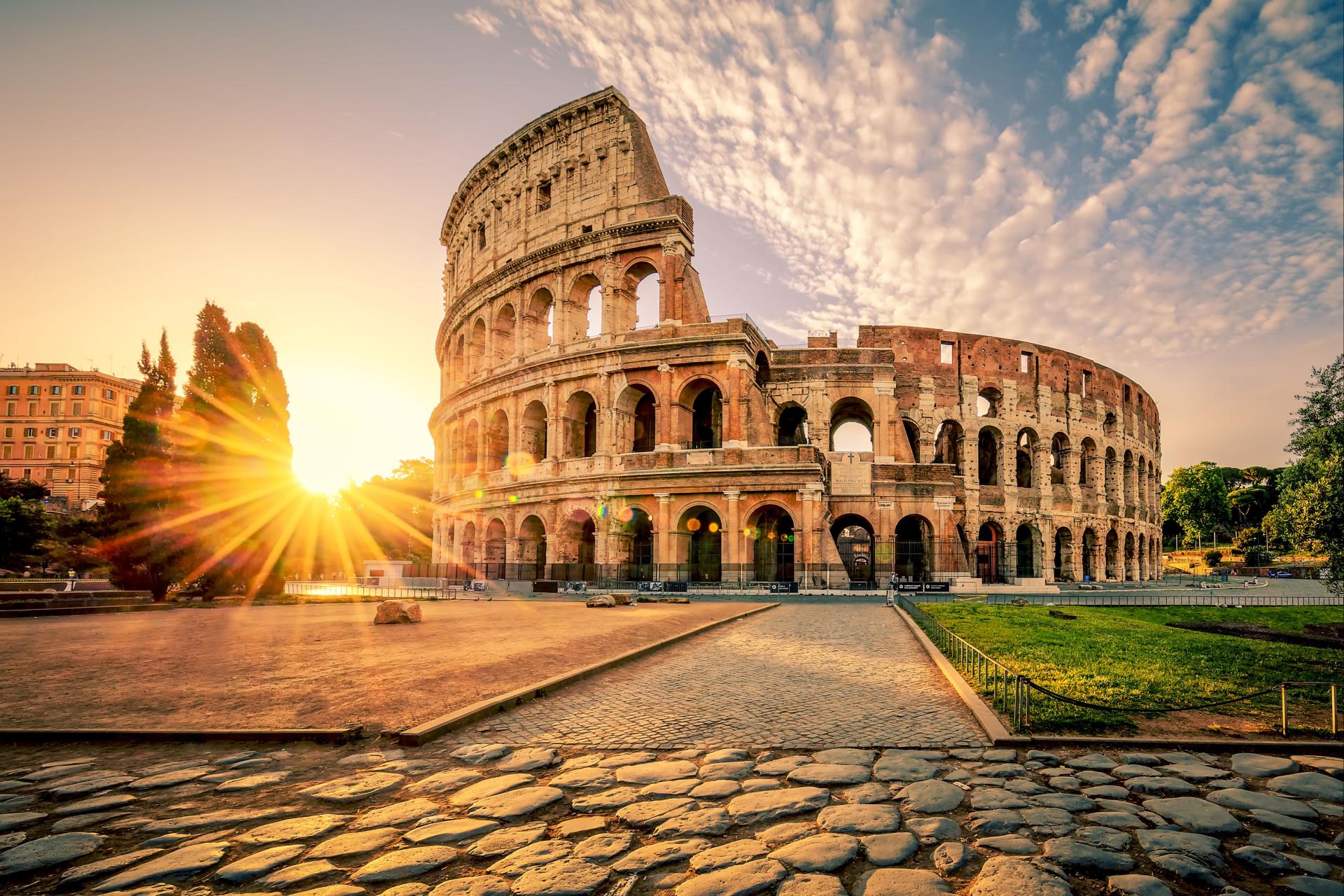
This is the heart of imperial Rome, and the area where planning ahead pays off most. Colosseum tickets are timed-entry, start at about 18 EUR and should be booked on the official ticketing site (colosseo.it). In summer, reserve several weeks ahead: time slots sell out quickly and walk-up lines are long. Allow half a day to cover the Colosseum, the Roman Forum and the Palatine Hill. The neighbouring Monti district, a few minutes away on foot, is a good area to stay and eat near the ancient sites.

The Vatican and Prati

St. Peter's Basilica, the Sistine Chapel and the Vatican Museums form the city's second essential hub. As with the Colosseum, skip-the-line tickets for the Vatican Museums should be booked several weeks in advance in summer. The residential Prati district next door offers hotels and restaurants that are often gentler on the budget than the historic centre, while staying within walking distance of St. Peter's Square.

The historic centre: Pantheon, Piazza Navona and the Trevi Fountain

Between the Tiber and the Via del Corso lies the historic centre of cobbled lanes, home to the Pantheon, Piazza Navona and the Trevi Fountain. It is the part of Rome best explored without a fixed itinerary, ideally early in the morning or in the evening once the tour groups thin out. Sleeping within this area costs more, but everything is on foot and the evening atmosphere is worth the difference on a first visit.

Trastevere

On the west bank of the Tiber, Trastevere is where Roman evenings happen: narrow lanes, laundry strung between windows, trattorias and wine bars that fill up from late afternoon. Cross the river for dinner, then walk back over the illuminated bridges. The district stays lively late; light sleepers may prefer to spend the evening here and stay elsewhere.

Testaccio and Roman food

To eat the way Romans do, head to Testaccio, a working-class district south of the centre known for its market and its unpretentious tables. It is a great place to try the Roman classics: cacio e pepe, carbonara, amatriciana, artichokes in season and supplì on the go. A simple rule that works across the city: the closer a patio sits to a famous monument, the higher the bill; two streets away, the same dish is often cheaper and better.

The budget, in Canadian dollars

Travel style Per day, per person (excluding flights) What it covers
Budget 110 to 160 CAD Hostel or simple room, trattorias, public transit
Mid-range 220 to 350 CAD 3-4 star hotel, restaurants, paid attractions
Comfort 450 CAD and up Central 4-5 star hotel, private guides, fine dining

These figures are conservative estimates, provided as a guideline, based on a July 2026 exchange rate of about 1.62 CAD per euro. Add the tourist tax (3 to 10 EUR per person per night depending on the property) and attraction tickets, including the Colosseum from about 18 EUR. Public transit is a minor line item: the 100-minute BIT ticket covers most rides, and the centre is largely walkable. Staying in Prati or Monti rather than in the heart of the historic centre often trims the accommodation bill without giving up location.

Entry requirements and health for Canadian citizens

  • Passport: valid for at least 3 months beyond your planned departure from the Schengen area; in practice, 6 months of validity is recommended.
  • Visa: none required for tourist stays of up to 90 days in any 180-day period across the Schengen area.
  • EES: in effect since July 2026, this system records your facial image and fingerprints on arrival in the Schengen area. Nothing to prepare; allow a few extra minutes at your first border crossing.
  • ETIAS: not yet in effect as of July 2026; the launch is planned for the last quarter of 2026 and applications are not open. Be wary of unofficial websites already selling a so-called authorization.
  • Health: routine vaccines up to date; usual precautions for COVID-19 and influenza. Tick-borne encephalitis is present in some areas of Italy (the vaccine is not available in Canada). Visit a travel health clinic 4 to 6 weeks before departure.
  • Travel insurance: essential, with coverage for medical care abroad.
  • Official advice: the Government of Canada advises exercising a high degree of caution in Italy due to the threat of terrorism. Check travel.gc.ca before you go.
  • Cash: amounts of 10,000 EUR or more must be declared at customs when entering or leaving the European Union.

One last tip: in Rome, it is not the flights that require the most lead time, it is the attractions. The Colosseum, the Vatican Museums and the Borghese Gallery should be booked several weeks ahead in summer, through official ticketing sites. Lock in your dates, secure your visit slots, then build the rest of the trip around them.

Ready to plan your trip to Rome? An AquaTerra travel advisor will handle direct flights, the right neighbourhood for your hotel and skip-the-line reservations, matched to your budget and dates. 450-628-6241 | 1-866-628-6241 | info@voyagesaquaterra.com

Voyages AquaTerra holds a Québec travel agency permit.

Frequently Asked Questions

No. Canadians can visit Italy visa-free for tourist stays of up to 90 days in any 180-day period across the Schengen area. Your passport must be valid for at least 3 months beyond your planned departure from the Schengen area; 6 months of validity is recommended in practice.
Direct flights from Montreal (YUL) to Rome-Fiumicino take about 8 hours 15 minutes, with Air Canada flying 1 to 2 times daily and Air Transat daily in season. From Toronto (YYZ), Air Canada, Air Transat and ITA Airways fly direct in about 8 hours 20 minutes, with roughly 27 weekly flights in July 2026.
April-May and late September-October are ideal, with temperatures of 18 to 25 C and more manageable crowds. July and August are very hot (often 32 to 37 C) and busy, and many Roman businesses close around mid-August for Ferragosto. Winter is mild, quiet and good value.
The Government of Canada advises exercising a high degree of caution in Italy due to the threat of terrorism. Day to day, normal big-city precautions apply, especially in busy tourist areas. Check travel.gc.ca for up-to-date official advice before departure.
As a guideline, excluding flights and per person: 110 to 160 CAD per day on a budget, 220 to 350 CAD mid-range (3-4 star hotel, restaurants, attractions) and 450 CAD and up for comfort. Add the city tourist tax of roughly 3 to 10 EUR per person per night depending on your accommodation.
In summer, Rome is 6 hours ahead of Montreal and Toronto: noon in Eastern Time is 6 p.m. in Rome. An evening departure from Canada therefore lands in Rome the following morning, local time.
Not for a summer 2026 trip: ETIAS is not yet in effect and applications are not open. According to the Government of Canada, the launch is planned for the last quarter of 2026. Be wary of unofficial websites already selling a so-called authorization. Note that since July 2026, the EU Entry/Exit System (EES) records your facial image and fingerprints on arrival, with no advance steps required.
Yes, strongly recommended. Colosseum tickets are timed-entry, start at about 18 EUR and are sold on the official site colosseo.it. The Vatican Museums and the Borghese Gallery should also be booked several weeks ahead in summer, when time slots sell out quickly.
The centre is very walkable and most major sights are within walking distance of one another. Rome also has a 3-line metro and a bus network; the BIT ticket is valid for 100 minutes. From Fiumicino airport, the Leonardo Express train reaches Roma Termini station in about 32 minutes.
Yes, easily. High-speed trains connect Roma Termini to Florence in as little as 1 hour 32 minutes, with about 47 direct departures a day. Many travellers link Rome, Florence and Venice by train on a single Italian itinerary.
  • #Travel
  • #Tourism
  • #Rome
  • #Italy
  • #Visit
  • #Destinations
  • #History
  • #Culture
  • #Cuisine
  • #Art
  • #City
  • #Vatican
  • #Colosseum
  • #Architecture
  • #Monuments
  • #Museums
  • #Roman Forum
  • #Trevi Fountain
  • #St. Peter's Basilica
  • #Transportation
  • #Accommodation
  • #Activities
  • #Tips
  • #Budget
  • #Itineraries
  • #Weather
  • #Language
  • #Districts
  • #Nightlife
  • #Shopping.