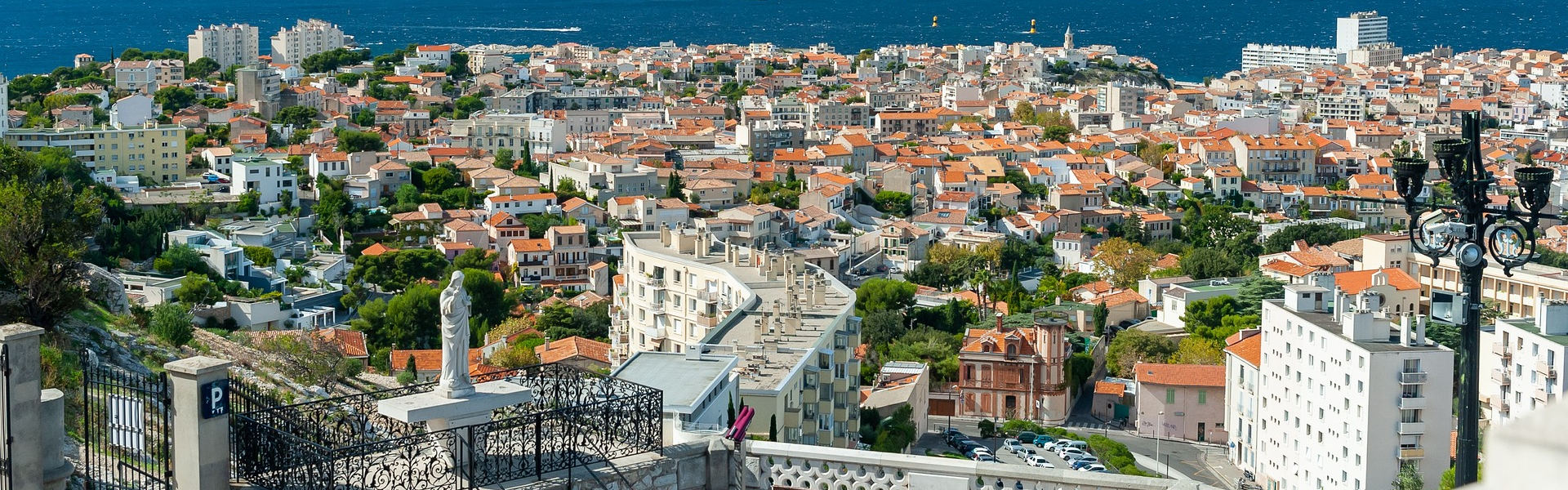
Marseille Travel from Canada: The Complete Guide
Marseille is one of the easiest gateways to the Mediterranean for Canadian travellers. Air Transat flies direct from Montreal (YUL) to Marseille (MRS) in about 7 hours, a well-established summer route that also stays on the airline's winter schedule with reduced frequencies; from Toronto, count on a connection through Montreal or through Paris followed by a 3-hour TGV ride. Canadian citizens need no visa for stays of 90 days or less in the Schengen area. Marseille is 6 hours ahead of Eastern Time. The best windows are May-June and September-October, when the sea is swimmable and crowds stay reasonable. As a guideline, budget $3,500 to $4,500 CAD per person for a mid-range week, flights included. Our advisors build Marseille and Provence itineraries every week — here is what you need to know.
The essentials at a glance
| Item | What to know |
|---|
| Flights from Canada | Direct Montreal–Marseille with Air Transat, about 7 h; no direct flight from Toronto |
| Visa for Canadians | None for up to 90 days in any 180-day period (Schengen); EES in effect, ETIAS not yet |
| Time difference | 6 hours ahead of Montreal and Toronto |
| Currency | Euro; €1 ≈ $1.60 CAD, as a guideline |
| Language | French |
| Best time | May-June and September-October |
| Driving | Right-hand side; a car is unnecessary in the city, useful for Provence |
| Power | 230 V, type E sockets; adapter required |
Why Marseille
A national park begins at the edge of the city: the Calanques, a chain of limestone coves between Marseille and Cassis where the water is swimmable from June to October. In town, the Old Port and its morning fish market, the MuCEM museum and Fort Saint-Jean, Notre-Dame-de-la-Garde watching over the rooftops, and Le Panier, the oldest neighbourhood in Marseille, can all be covered on foot.
The city also works as a base camp for Provence: Aix-en-Provence sits about 30 minutes away, Cassis lies just beyond the calanques, and the lavender fields of the Valensole plateau make an easy day trip. To place Marseille within a longer itinerary, see our France travel guide.
When to go
| Period | Climate and things to know | Verdict |
|---|
| May-June | Swimming possible from June, reasonable crowds; lavender from late June | Ideal |
| July-August | Hot, dry and busy; hiking areas may close on days of high fire risk; Sugiton requires a reservation | Good, with planning |
| September-October | Sea often swimmable through October, fewer visitors | Ideal |
| November-April | Mistral wind more frequent; clear blue skies but noticeably cooler temperatures | Quiet city break, no beach |
The mistral deserves a word: this strong, cold wind blows several days a year, mostly from fall through spring. It clears the sky to a striking blue, but it can drop the felt temperature sharply. Pack a windbreaker, even in May.
For lavender, bloom runs from late June to mid-July on the Valensole plateau and in the Luberon; the Sault area flowers a little later. Day trips run from Marseille or Aix-en-Provence.
Getting there from Canada
From Montreal, Air Transat operates the direct flight to Marseille in about 7 hours. The route is well established in summer and stays on the winter schedule with reduced frequencies; depending on the season, check operating days with your advisor. New for summer 2026: a direct Quebec City (YQB)–Marseille flight with Air Transat, once a week on Thursdays from May 21 to October 8, 2026, on an A321neoLR.
From Toronto, there is no direct flight to Marseille. Connect through Montreal, or fly to Paris and take the TGV to Marseille's Saint-Charles station, a train ride of about 3 h to 3 h 20. TGV tickets run roughly $50 to $160 CAD depending on how far ahead you book, as a guideline.
The neighbourhoods and sights to know
The Old Port and Notre-Dame-de-la-Garde
The Old Port remains the heart of the city. In the morning, fishers sell their catch at the quayside fish market. Nearby, the MuCEM and Fort Saint-Jean mark the harbour entrance. On its hilltop, Notre-Dame-de-la-Garde, known to locals as "la Bonne Mère", watches over the city; the panoramic view alone is worth the climb.
Le Panier
Just north of the Old Port, Le Panier is the oldest neighbourhood in Marseille: colourful lanes, artists' workshops and the Vieille Charité, a former almshouse turned cultural centre. It is also a good place to buy genuine Marseille soap, made with 72% vegetable oils; traditional soap factories can be visited in and around the city. Watch out for perfumed imitations sold everywhere.
The calanques
The Calanques National Park stretches between Marseille and Cassis. One key point for summer: access to the Sugiton calanque requires a free but mandatory reservation. In 2026, the system applies on June 20-21, every day from June 27 to August 30, then September 5-6 and 12-13; you book online through the Calanques National Park website within a window of a few days before your visit. The other calanques (Sormiou, Morgiou, En-Vau from Cassis) remain freely accessible, subject to trail closures on days of high fire risk: in July and August, check the access map the day before you hike.
Day trips: Cassis, Aix-en-Provence and the islands
Cassis, a small port beneath the cliffs, pairs with the Route des Crêtes for a scenic day of coastal driving. Aix-en-Provence, about 30 minutes away, makes an easy outing for its markets and fountains. From the Old Port, the sea shuttle reaches the Frioul islands and the Château d'If for roughly $18 to $25 CAD return, as a guideline.
The Marseille table
Real bouillabaisse is usually ordered in advance and does not come cheap: often €60 to €80 and up per person, roughly $100 to $130 CAD. Be wary of cut-price versions pushed around the port. Day to day, lunch menus run $25 to $40 CAD and dinner $55 to $100 CAD per person with wine, as a guideline. The morning fish market on the Old Port sets the tone for the local cuisine.
Budget, in Canadian dollars
| Item | Range, as a guideline |
|---|
| Round-trip flight Montreal–Marseille (direct) | About $850 to $1,500 CAD depending on the season |
| Accommodation per night (double occupancy) | Budget $110-170 CAD; mid-range $190-320 CAD; high-end $400 CAD and up |
| Meals | Lunch menu $25-40 CAD; dinner $55-100 CAD per person with wine |
| Transport and activities | Metro or tram ticket ≈ $3 CAD; Frioul-If shuttle $18-25 CAD; TGV Marseille-Paris $50-160 CAD |
| One-week budget per person (flights included) | Budget $2,600-3,100 CAD; mid-range $3,500-4,500 CAD; high-end $5,500 CAD and up |
Ranges based on €1 ≈ $1.60 CAD (July 2026), as a guideline; exchange rates vary.
Entry requirements and health for Canadian citizens
- Passport: valid for at least 3 months beyond your planned departure from the Schengen area and issued within the last 10 years.
- Visa: none required for tourist stays of 90 days or less in any 180-day period in the Schengen area.
- EES: the European Entry/Exit System has been in effect since October 2025; your photo and fingerprints are recorded on first entry into Schengen. Allow a few extra minutes at border control.
- ETIAS: not yet in effect as of July 2026; applications are not open. Launch is planned for the last quarter of 2026 and may slip to 2027. Nothing to do for now.
- Health: no vaccines required; keep routine vaccinations up to date.
- Travel insurance: buy medical and cancellation coverage before departure; without it, care in France comes out of your own pocket.
- Official source: check current requirements at travel.gc.ca before you leave.
Our advice, after sending hundreds of clients
Book the summer direct flight several months ahead, because frequencies are limited, especially out of Quebec City with a single weekly departure. If Sugiton is on your list between late June and mid-September, set a reminder for the free online reservation, because the booking window only opens a few days before your visit. In peak season, make a habit of checking the trail access map the evening before every hike: one windy day can close the calanques.
For bouillabaisse, order ahead at a reputable address rather than settling for a cheap menu on the port. And if the mistral picks up during your stay, save the museums for those days: the MuCEM and the Vieille Charité do not care about the wind, and the cleared sky makes evening photos from la Bonne Mère remarkable.
Ready to plan your Marseille trip? Talk to an advisor who knows the ground — free of charge and with no obligation. 450-628-6241 | 1-866-628-6241 | info@voyagesaquaterra.com — More than 950 advisors across Quebec.
Voyages AquaTerra holds a Québec travel agency permit.
Frequently Asked Questions About Marseille
Do Canadians need a visa to visit Marseille?
No visa is required for tourist stays of 90 days or less in any 180-day period in the Schengen area. Your passport must be valid for at least 3 months beyond your planned departure from Schengen and issued within the last 10 years. Since October 2025, the EES system records your photo and fingerprints on first entry.
How long is the flight to Marseille from Canada?
The Air Transat direct flight from Montreal (YUL) to Marseille (MRS) takes about 7 hours. From Toronto, plan on a connection through Montreal, or fly to Paris and take the TGV, about 3 h to 3 h 20 to Saint-Charles station.
What is the best time to visit Marseille?
May-June and September-October combine swimmable sea temperatures with reasonable crowds. July and August are hot, dry and busy, and hiking areas can close on days of high fire risk. Lavender blooms in Provence from late June to mid-July.
Is Marseille safe for tourists?
As in any large city, apply the usual precautions: keep an eye on your belongings in busy areas such as the Old Port and on public transit. Check the Government of Canada's current advice at travel.gc.ca before departure.
How much does a week in Marseille cost?
As a guideline, per person with flights included: about $2,600 to $3,100 CAD on a budget, $3,500 to $4,500 CAD mid-range, and $5,500 CAD and up at the high end. These ranges are based on €1 ≈ $1.60 CAD.
What is the time difference between Canada and Marseille?
Marseille is 6 hours ahead of Montreal and Toronto. When it is noon in Toronto, it is 6 p.m. in Marseille. The overnight flight to Europe helps absorb the jet lag from day one.
Do you need a reservation to visit the Sugiton calanque?
Yes, in summer access to Sugiton requires a free but mandatory reservation. In 2026 the system applies on June 20-21, every day from June 27 to August 30, then September 5-6 and 12-13. You book online through the Calanques National Park website a few days before your visit.
Is there a direct flight from Quebec City to Marseille?
Yes, new for summer 2026: Air Transat flies direct from Quebec City (YQB) to Marseille once a week on Thursdays, from May 21 to October 8, 2026, on an A321neoLR.
Can you see the lavender fields from Marseille?
Yes, on a day trip from Marseille or Aix-en-Provence. Bloom runs from late June to mid-July on the Valensole plateau and in the Luberon; the Sault area flowers a little later.
What is the mistral and should I worry about it?
The mistral is a strong, cold wind that blows several days a year, mostly from fall through spring. It clears the sky to a deep blue but noticeably cools the temperature, and it can trigger trail closures during fire-risk periods. A windbreaker is usually all you need to enjoy those days.