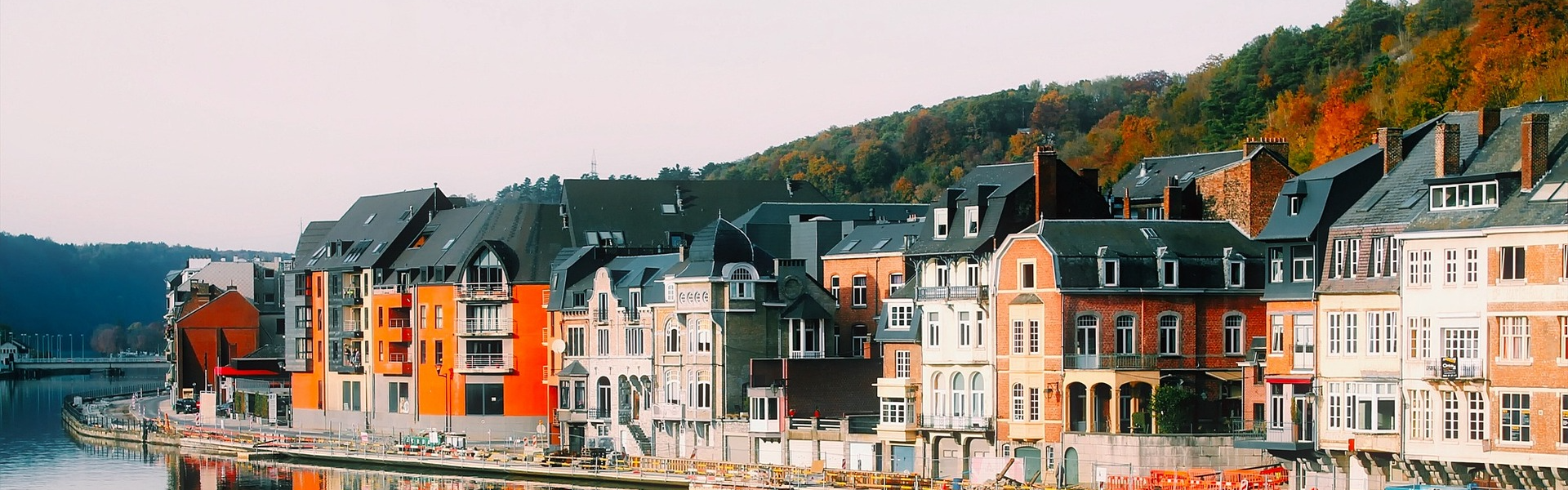
To plan this trip, see also chocolate travel and Christmas markets.
Departure
Return
Loading
Choose a country or city
Belgium Destinations
Frequently Asked Questions
No. Canadian citizens can visit Belgium visa-free for up to 90 days in any 180-day period within the Schengen area. Your passport must be valid at least 3 months beyond your planned departure from Schengen. Since October 2025, the EU's Entry/Exit System records your photo and fingerprints on arrival; no action is needed before you travel.
About 6 h 45 nonstop from Montréal to Brussels with Air Canada or Air Transat, and a little over 7 hours on the way back. From Toronto there is no nonstop service: connecting through Montréal, London, Frankfurt or Amsterdam brings total travel time to roughly 9 to 11 hours.
May through September brings the mildest weather (18 to 25 °C in summer) and long evenings. April and May offer spring blooms with smaller crowds, while September combines soft light with good prices. December is worth braving the cold for the Christmas markets in Brussels, Bruges and Liège. Rain is possible in any month, so pack accordingly.
Broadly yes. The Government of Canada advises exercising a high degree of caution because of the terrorism threat affecting Europe as a whole. Day to day, the main risk is pickpocketing in Brussels train stations and on the metro, particularly around Brussels-Midi. Flemish cities and the Ardennes are very quiet.
As a guideline, plan on 2,500 to 4,000 CAD per person, double occupancy, for a comfortable week including flights. Budget travellers using hostels and friteries can manage on roughly 1,800 to 2,200 CAD. Belgium is generally a little cheaper than Paris or Amsterdam, especially for restaurants.
Belgium is 6 hours ahead of Montréal and Toronto (Eastern Time). When it is noon in Toronto, it is 6 p.m. in Brussels. The gap briefly narrows to 5 hours for a week or two each spring and fall because Europe and North America change their clocks on different dates. Western Canada adds up to 3 more hours.
Belgium has five Trappist beers brewed within abbey walls: Chimay, Orval, Rochefort, Westmalle and the hard-to-find Westvleteren. Most cafés across the country serve several of them, and some abbeys run visitor centres or inns nearby. In Brussels, also try lambic and gueuze, spontaneously fermented beers unique to the region, notably at the Cantillon brewery.
Yes, easily. SNCB trains link Brussels to Bruges in about 1 hour, Ghent in 35 minutes and Antwerp in 45 minutes, with frequent departures and discounted weekend return fares. Eurostar adds Paris in 1 h 22 and Amsterdam in about 1 h 50. A car only becomes useful for the Ardennes and rural Wallonia.
Three official languages: Dutch in Flanders (Bruges, Ghent, Antwerp), French in Wallonia and German in a small eastern region. Brussels is officially bilingual French-Dutch. English is widely spoken in tourist areas and by younger Belgians, so anglophone Canadians travel comfortably, and francophones feel at home in Brussels and Wallonia.
Cards are accepted almost everywhere, including cafés. Keep some euro cash for frite stands, markets and public washrooms. Service is included in restaurant bills, so tipping is not expected; Belgians simply round up or leave a few euros for attentive service.


